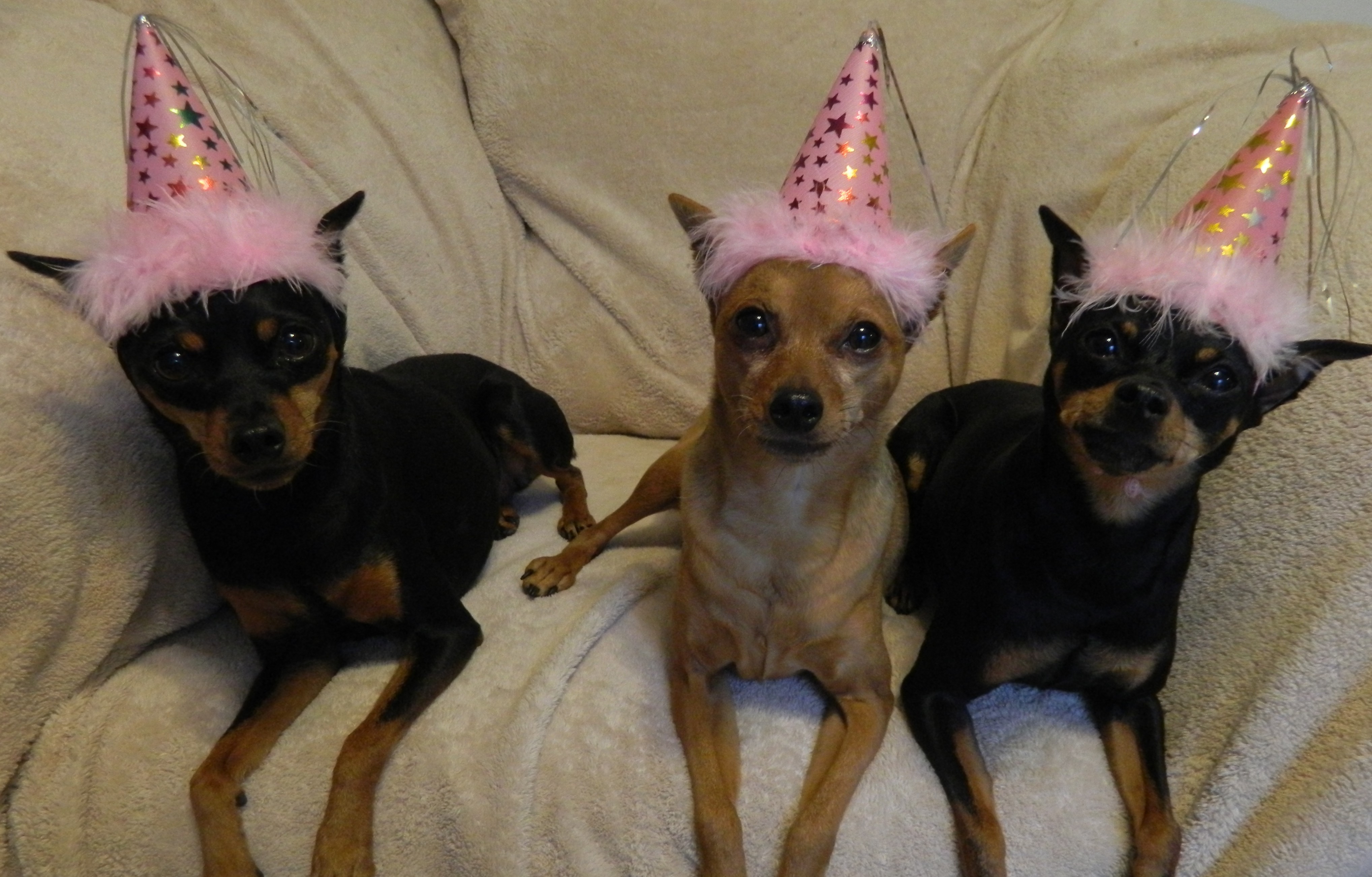
Happy Birthday to my Min Pins!
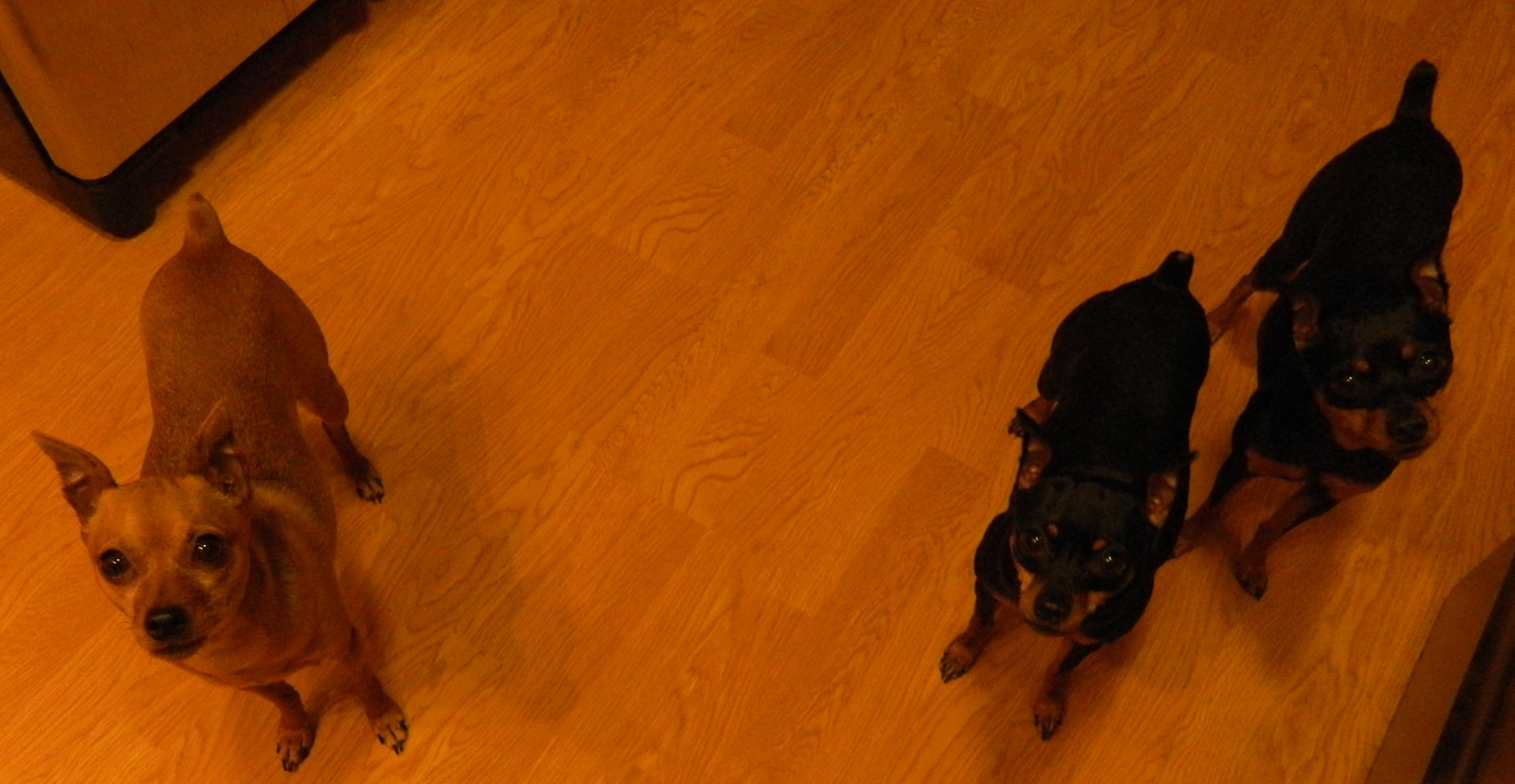
Waiting for Cake
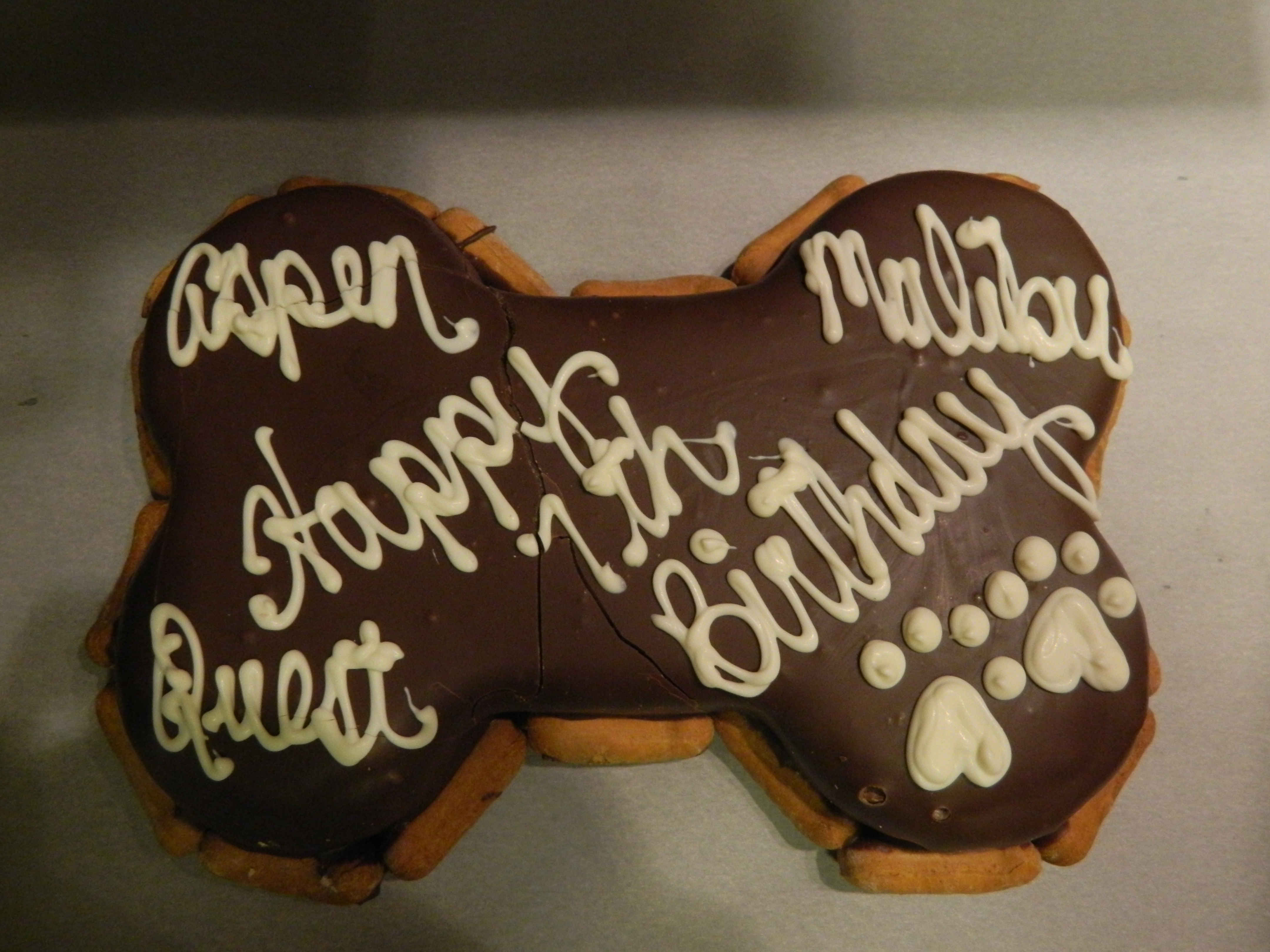
Happy 7th Birthday – Aspen, Malibu, & Quest
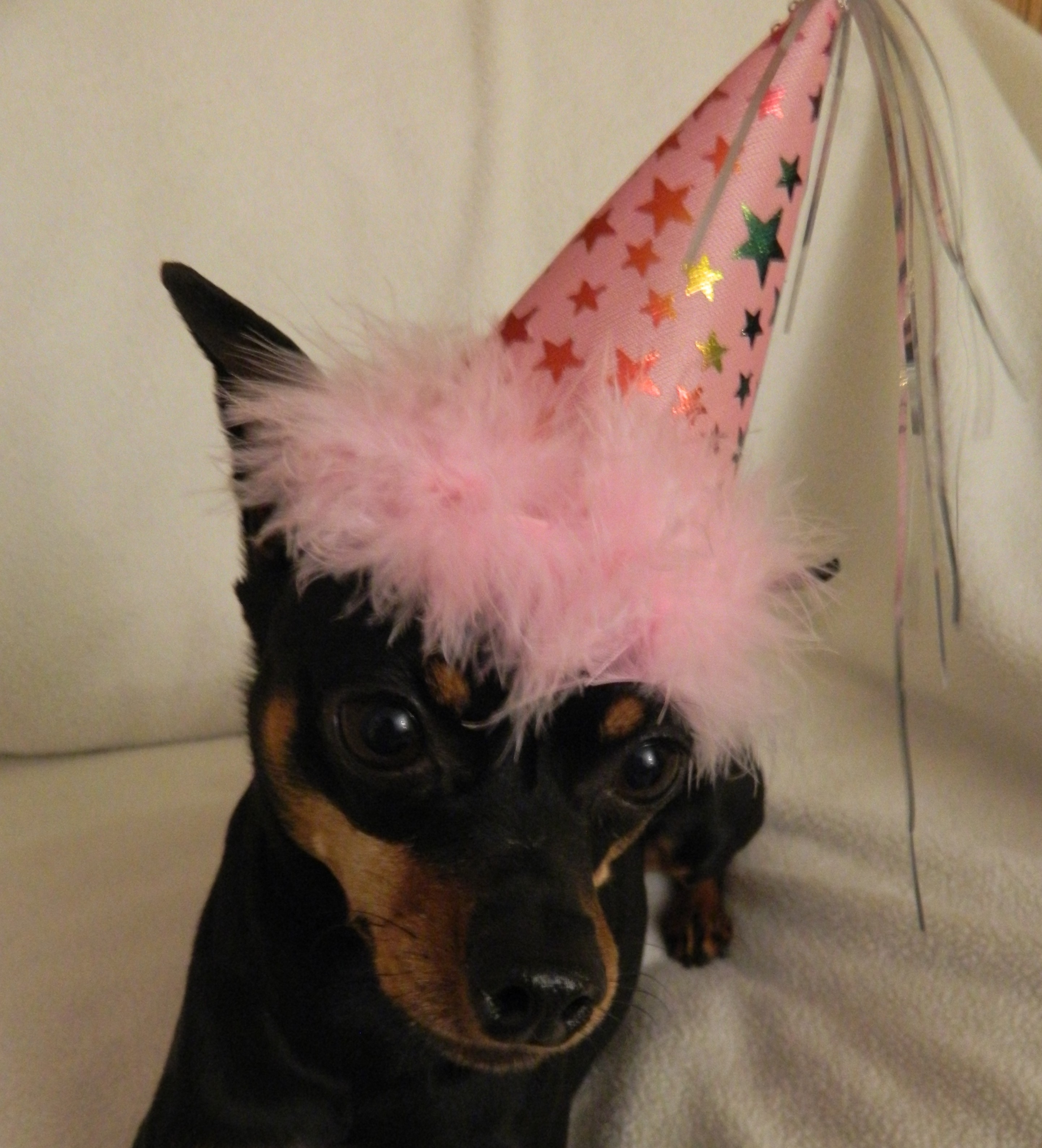
QUEST
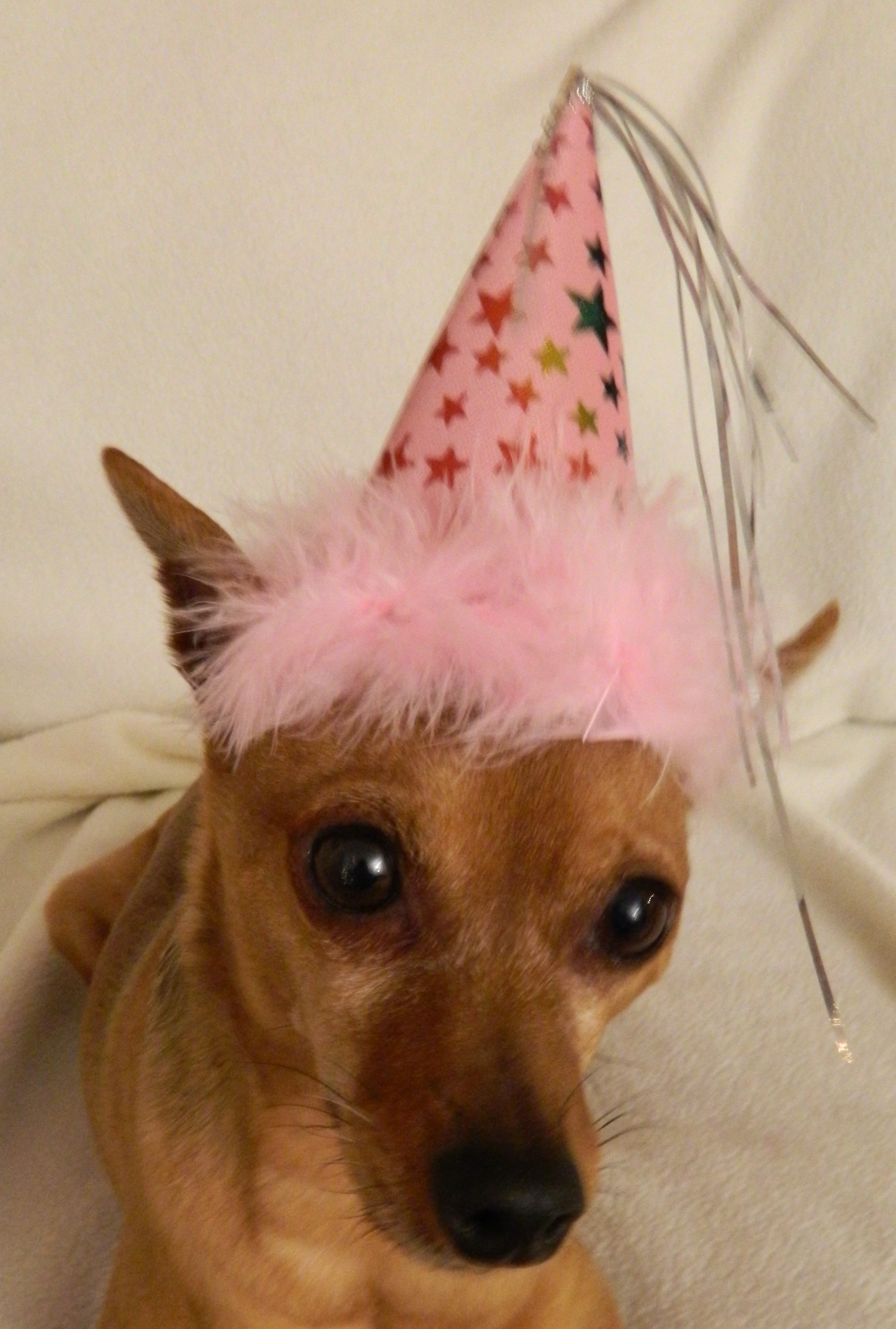
ASPEN
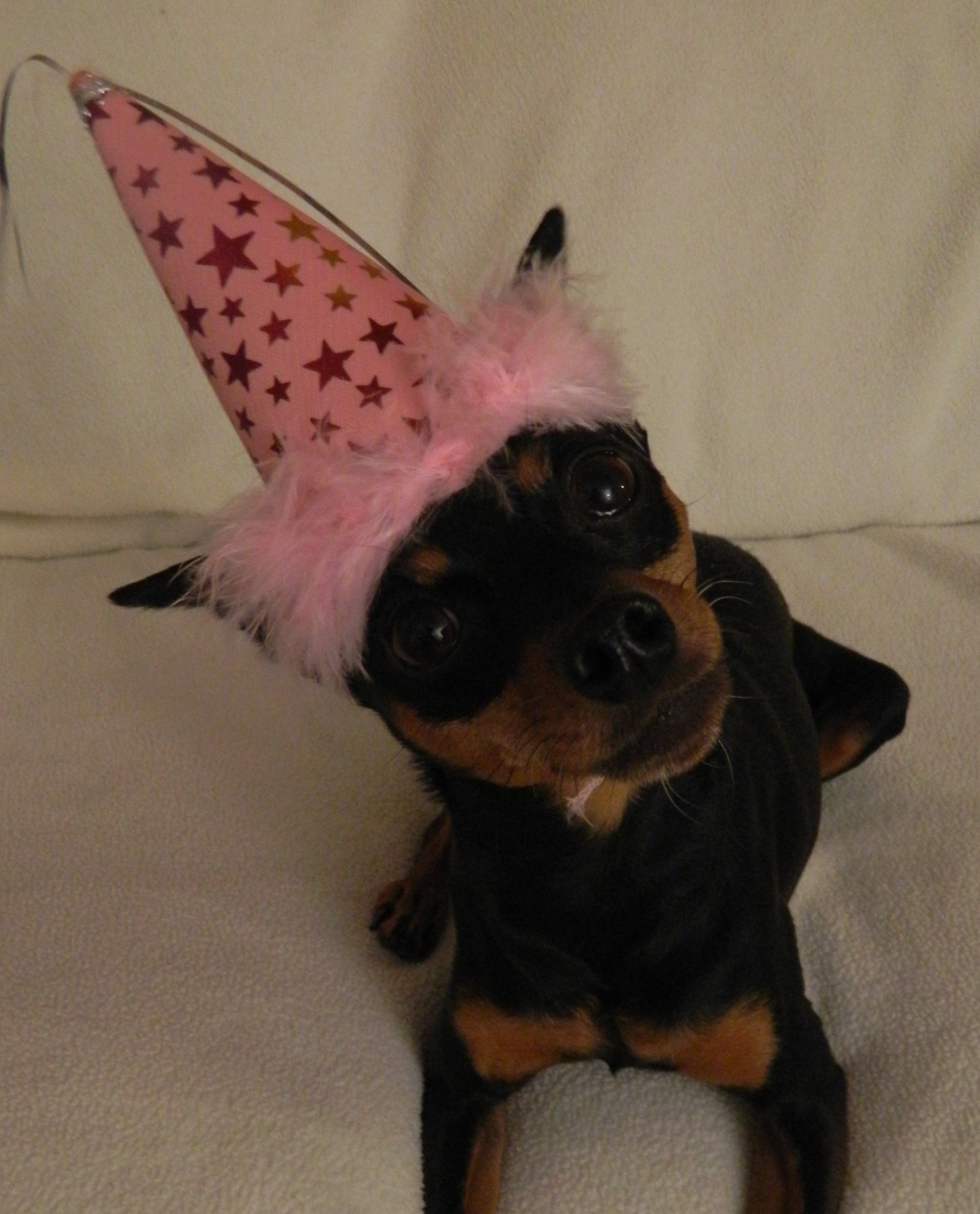
MALIBU
All paws up to The Barkery, in Tewksbury, MA. According to the girls, their doggie birthday cake was delicious!
My Life in a Min Pin World
December 17, 2014
Uncategorized doggie birthday cake, Miniature Pinschers Leave a comment
Happy Birthday to my Min Pins!
Waiting for Cake
Happy 7th Birthday – Aspen, Malibu, & Quest
QUEST
ASPEN
MALIBU
All paws up to The Barkery, in Tewksbury, MA. According to the girls, their doggie birthday cake was delicious!
December 16, 2014
Uncategorized Miniature Pinschers Leave a comment
Every December, a canine holiday photo shoot is at the top of my to-do list. The goal is always the same – to capture the perfect image for our Christmas card. My Min Pins are troopers, holding their positions while I make silly noises that encourage the trio to look directly at the camera.
Since I used individual shots of the girls for last year’s card, I wanted a group picture this year. Santa suits, reindeer antlers, and other festive apparel has been worn in past years, so this year the girls wore new pajamas from Auntie Sheila.
The shoot went well and the crew was eager to pose for pictures. It probably helped that I had yummy treats on hand to dole out as needed. A couple of minor issues cropped up, but were easily managed.
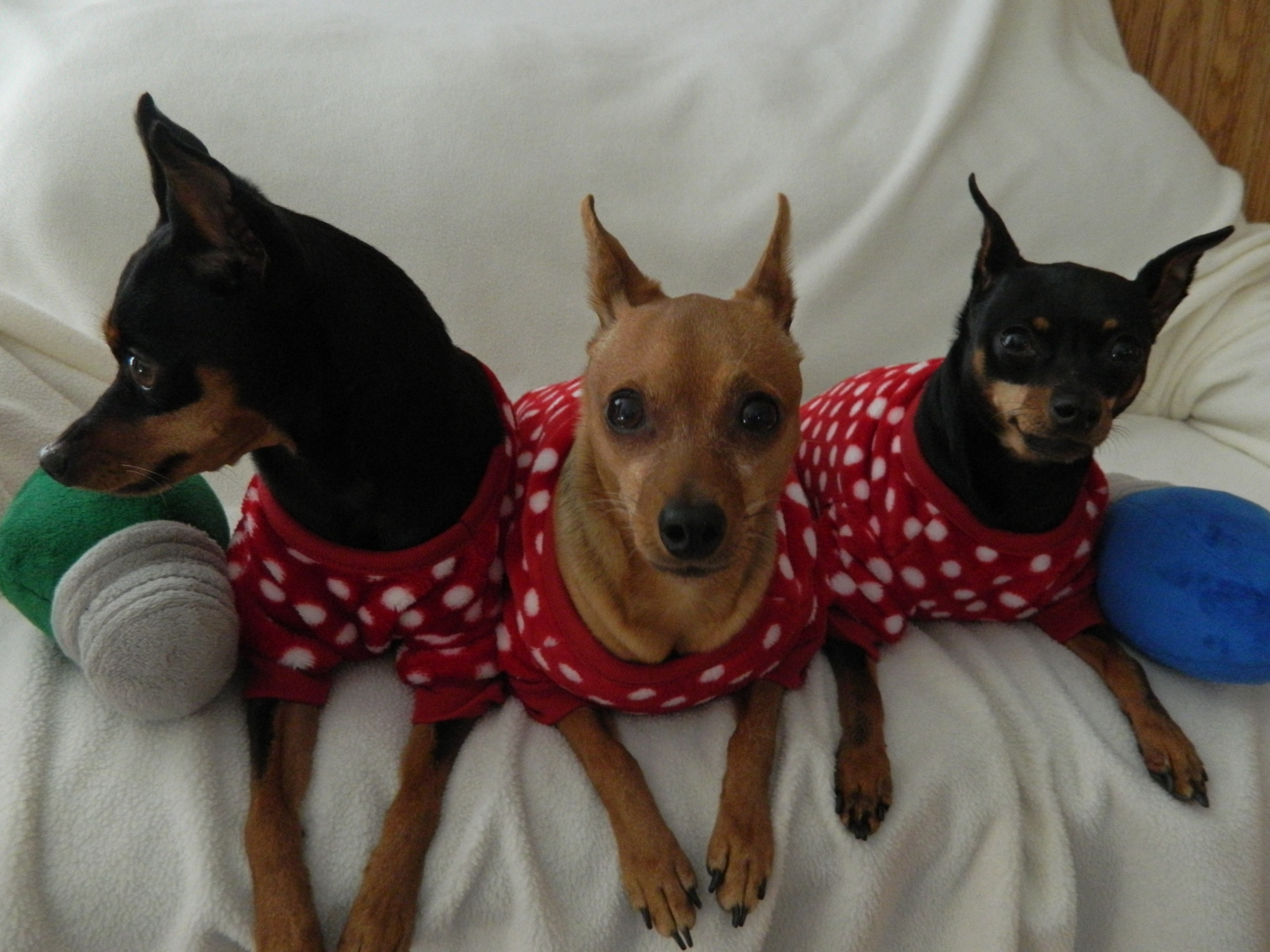
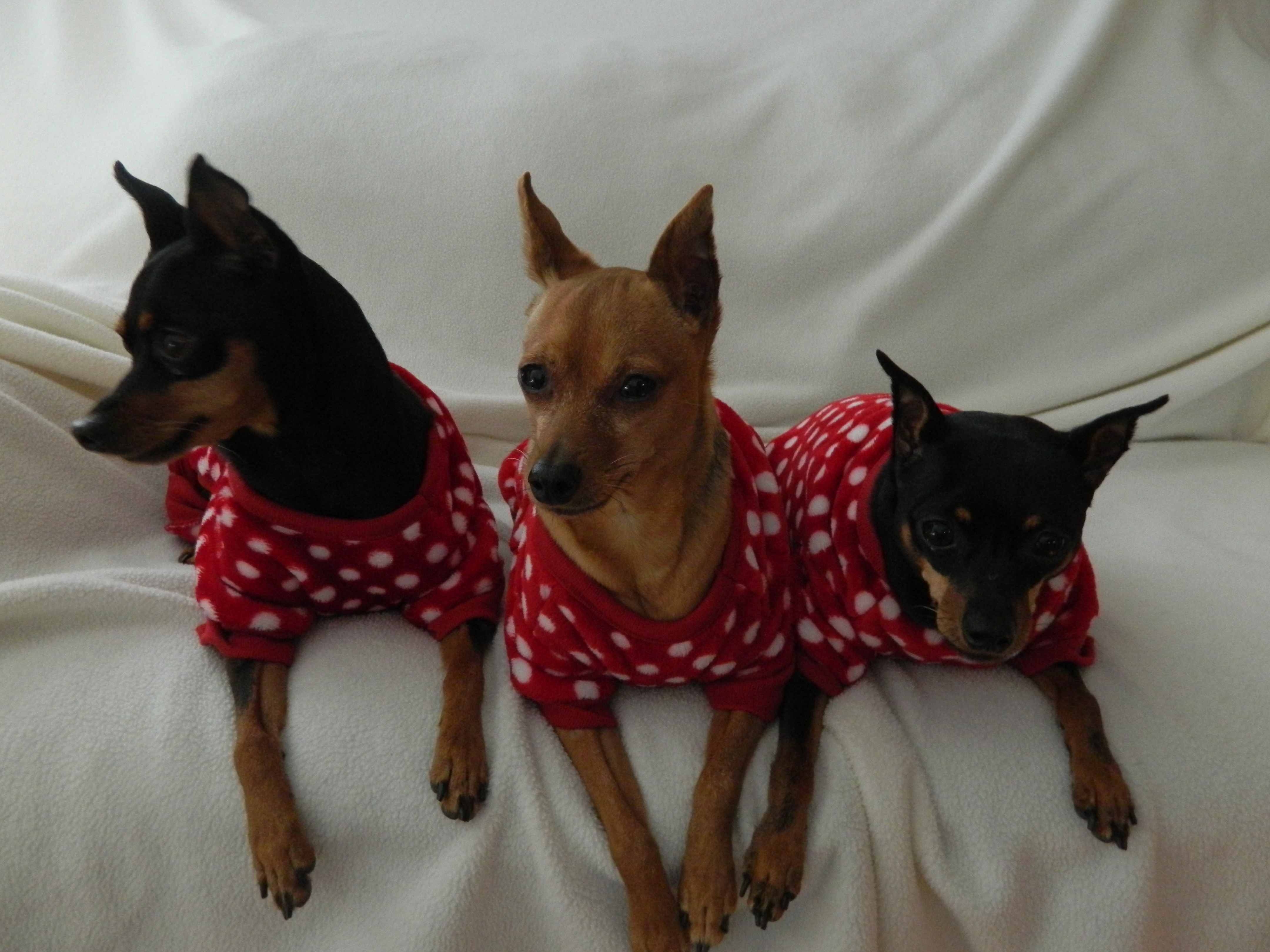
Malibu refused to look at the camera for a few minutes because that would require getting too close for comfort to Aspen. Always ready to deflect potential aggression from her littermate, Malibu has mastered the art of using non-threatening body language to appease Aspen, thereby avoiding a confrontation. Fortunately, Aspen interpreted Malibu’s calming signals and behaved herself during the session.
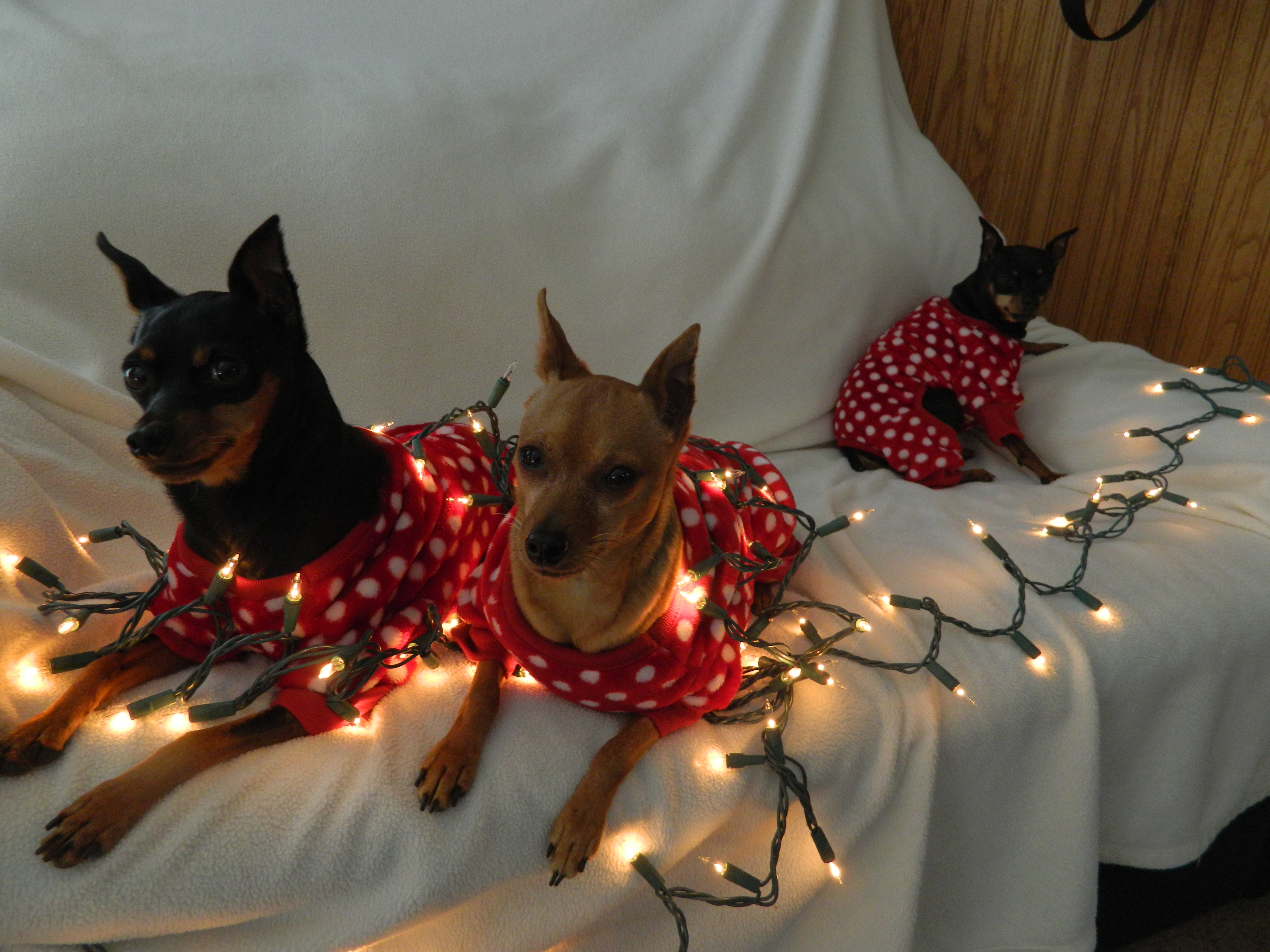
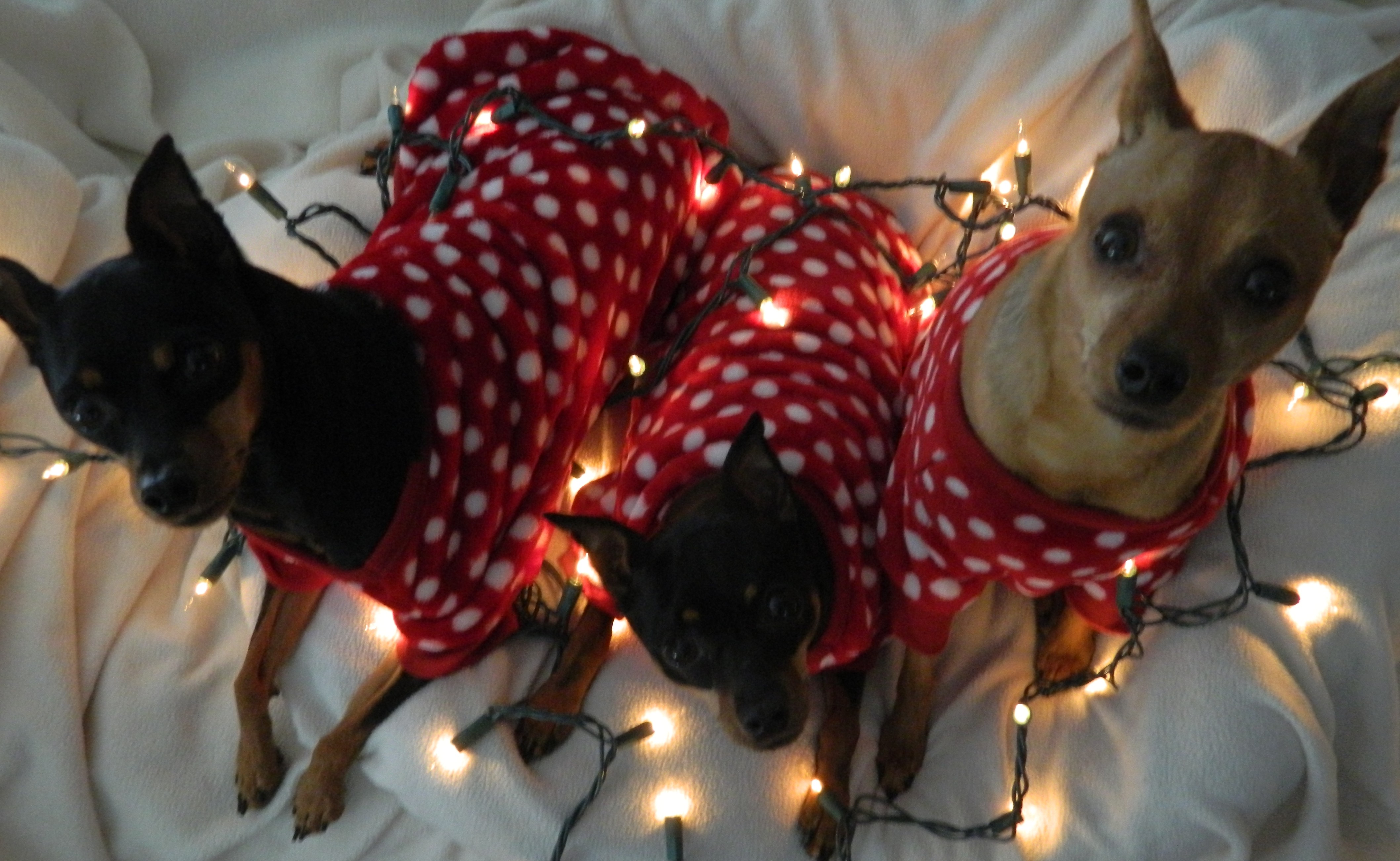
Wanting to try something new and creative, I wrapped some holiday lights around the girls. At first, Quest wanted nothing to do with this crazy idea and removed herself from the group. Once she realized that the lights were nothing to fear, she returned to her center position.
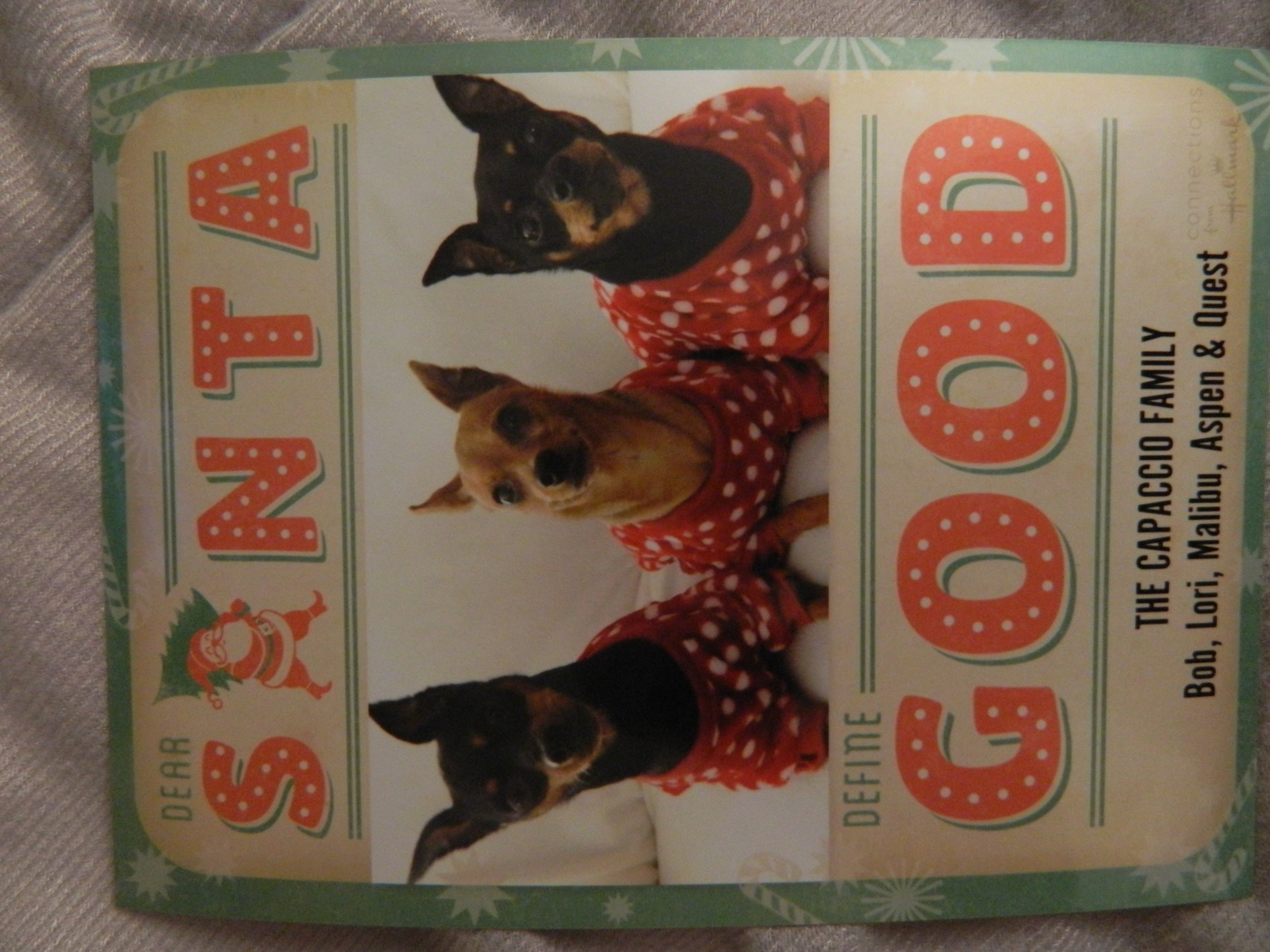
Almost ninety images were taken, and the very first one is the picture I selected for our 2014 holiday card!
Happy Holidays!
November 30, 2014
Uncategorized Miniature Pinscher, National Dog Show 2014 Leave a comment
Miniature Pinschers are notorious for their Houdini-like escape skills and last week a fine example of this talent was televised for the world to see. A Min Pin named Timmy stole the hearts of viewers during the National Dog Show which aired on Thanksgiving. The tiny dog did not win the competition, but created more media buzz than Nathan, a Bloodhound, who was named Best in Show.
During the Toy Group segment of the competition, Timmy slipped off of his lead and ran to the center of the ring while another dog in his group was being gaited. “An intruder has crossed the ring”, chuckled one of the commentators who appeared to take great delight in this unexpected event. The handler of Timmy was less than thrilled as she walked across the ring, scooped up the naughty dog, and carried him away. As the horrified handler left the ring with Timmy secured in her arms, a commentator made a spot on remark, “Living with a Miniature Pinscher is comparable to living with a two-year old child”. Just to remind you, I have three of these dogs!
Pinscher Pinches Spotlight at National Dog Show
October 29, 2014
Uncategorized Dr. Karen Overall, Fluoxetine, Gabapentin, inter-dog aggression, Miniature Pinschers, Relaxation Protocol, Trazodone, veterinary behaviorist 2 Comments
Halloween is almost here and something wicked this way comes. The cackling of a witch is not what I hear, but a much more menacing sound. It is the growl of a Min Pin.
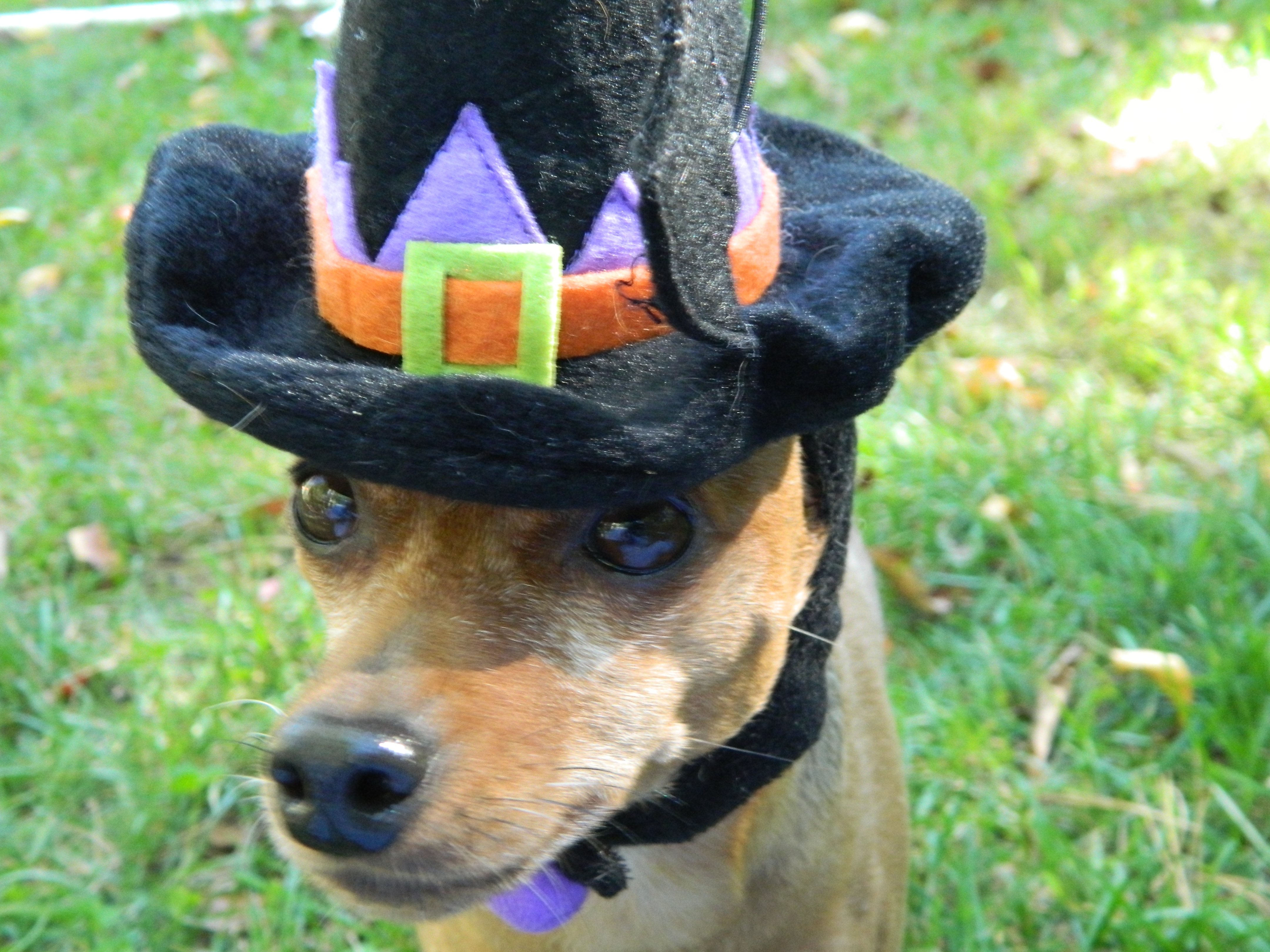
Aspen
Some may think it is cute when a tiny dog growls, but I can assure you that it is not. For it is often a precursor to more aggressive behavior. A growl was the first sign of inter-dog aggression in our home. I cannot remember exactly when I first heard this sound, but it was around the time of the pups’ first birthday. Aspen would growl at Malibu for no apparent reason. Sometimes it appeared to be resource guarding of toys or preferred seating, but other times it seemed totally random.
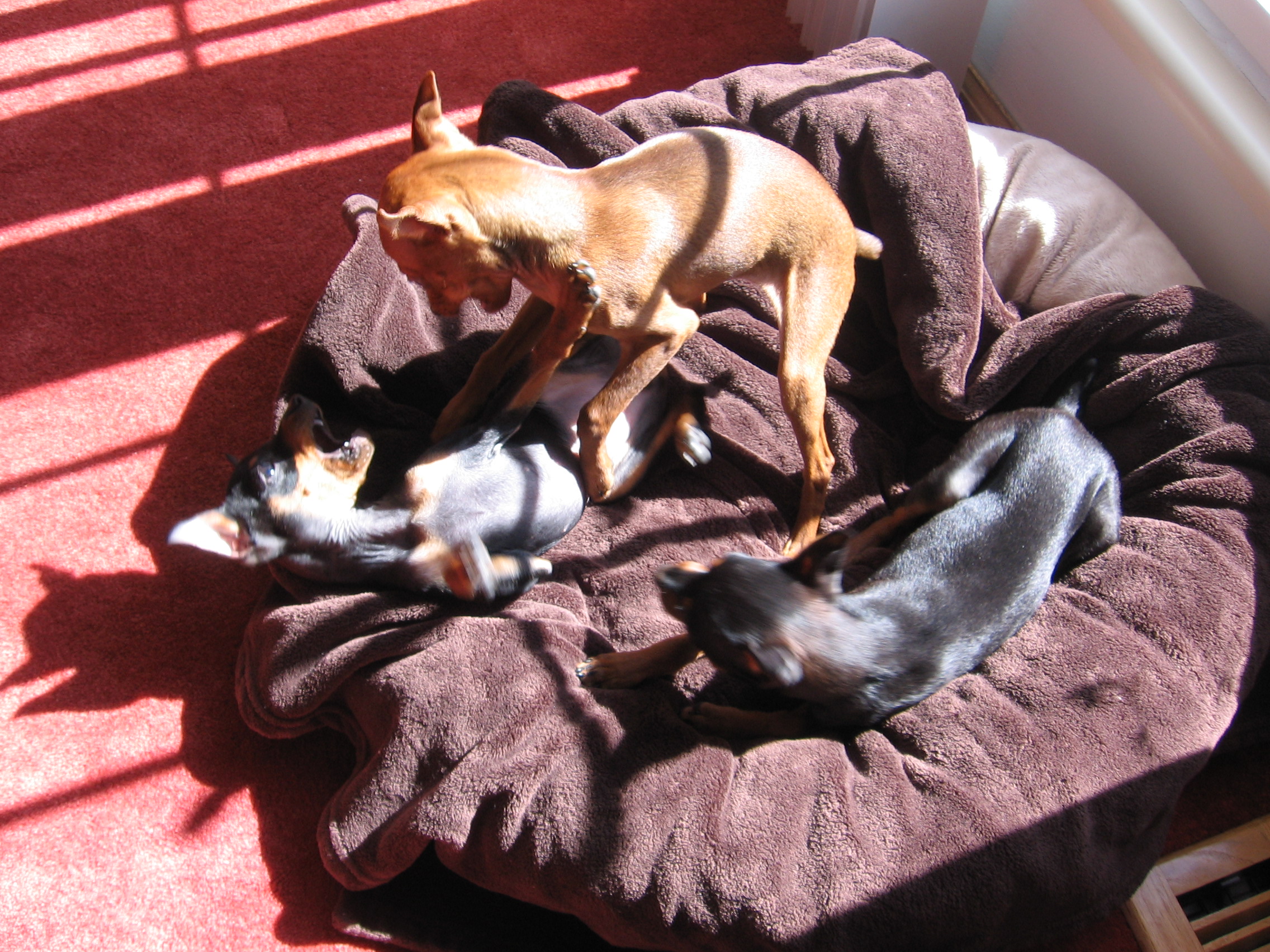
At three months – Playful pups, or a preview of future problems?
For the first few years, that is all it was, growling. Over time, Aspen’s growling transitioned to lunging and pouncing on Malibu. Trying to protect herself from an attack, Malibu will shake Aspen off of her back. Then the two of them will be standing on their hind legs in a face-to-face scuffle. The entire episode, from start to finish, lasts less than ten seconds. Fortunately, this scenario is not a regular occurrence, and I am hoping that it never becomes one.
When Aspen began showing aggression towards Malibu, unsolicited advice given to me early on with the pups began creeping back into my thoughts. Seeking information about mouthy puppies, I had visited several online forums shortly after bringing the pups home. The mouthing was not addressed at all; instead I was warned about aggression among female littermates and encouraged to rehome two of the puppies. I was told that female littermates have a tendency to fight, and that those fights can be brutal, even deadly.
Physically, none of my Min Pins have been injured thus far and I would prefer to keep it that way. I admit that I should have sought help much sooner, but as we all know, hindsight is twenty-twenty. Had I known a growl would lead to more…
Desperate for advice on inter-dog aggression, I scheduled an appointment with a vet behaviorist. I decided against returning to Tufts University, where I had taken Quest for her hyper-reactivity, when I learned that another highly-regarded behaviorist was only a couple of hours away.
In early summer of 2014, I took my entire crew to meet with veterinary behaviorist, Dr. Karen Overall. My Min Pins were six years old at the time of our visit. Prior to our consultation, I was required to complete a lengthy survey and submit videos of our home environment, daily routines, and, if possible, the problem behavior. A clear representation of Aspen’s behavior towards Malibu was captured, providing Dr. Overall with solid evidence of the drama that unfolds inside of our home.
We spent several hours with Dr. Overall discussing Aspen’s aggression towards Malibu, Quest’s previous diagnosis of social phobia, as well as the general reactive behavior of our Min Pins. While we were with Dr. Overall, Quest had her anxiety on full-display and Aspen picked a fight with Malibu. Both events provided Dr. Overall with a front-row seat to the primary issues in which I have been struggling to find solutions. As for Aspen’s outburst, Dr. Overall stated, “Aspen is pretty serious in her threats, but is not as overly aggressive as she could be – she is so explosive that we are lucky she doesn’t bite.”
Dr. Overall relieved me when she added, “Since Aspen’s behavior has remained the same over the past few years, and not escalated to more serious aggression, it most likely will not worsen over time.” Of course, there are no certainties, but I did feel better after hearing Dr. Overall’s view on future episodes of inter-dog aggression in our home.
I was not surprised that Dr. Overall felt that both Aspen and Quest would benefit from medication. Gabapentin was prescribed for Quest and Fluoxetine for Aspen. Several adjustments have been made over the last couple of months. Trazodone was added for Quest and seems to be helping her. I will update Quest’s progress in a future post.
After being on the Fluoxetine for a little over two months, I weaned Aspen off when I saw no improvement in her behavior. She then began taking Trazodone which helped less, making me realize that the Fluoxetine may have been working. Aspen is now taking both Fluoxetine and Trazodone. It is too soon to know if this combination of drugs will help, but I have learned to take things one day at a time.
Shortly after our consultation, I received a detailed plan that included a diagnostic summary for each dog, medication information, highlights of our discussions, protocols for behavior modification and relaxation, and much more. This plan has become my handbook as it is now an essential component in the rehabilitation of my dogs. Dr. Overall continues to oversee the well-being of my dogs. No drug or dosage change is made without her guidance. Dr. Overall also views the videos that I send and responds promptly with a detailed behavioral analysis. This feedback helps keep my dogs’ progress on track and headed in the right direction.
Protocols for deference, breathing and relaxation, programs created by Dr. Overall, were included in the plan for my three dogs. The goal of these protocols is to create calmer, more relaxed dogs by teaching them that they have some control over their reactivity. Other protocols focus on inter-dog aggression, “special-needs” pets and behavioral medication. It has not been easy fitting these programs into an already hectic schedule, but I am in it for the long haul. These programs will be practiced with my Min Pins for years to come.
Dealing with my crew’s reactive behavior has been a walk in the park compared to handling inter-dog aggression in our home. To a degree, reactivity can be managed by avoiding certain places or situations. Further, through various channels, I have learned how to handle my reactive dogs. It continues to be challenging, but I have gotten a lot of hands-on experience over the past few years.
Inter-dog aggression is a complicated problem with no easy answers or quick fixes. I cannot explain why Aspen is aggressive towards Malibu, and will probably never know the cause of her behavior. Dr. Overall feels that it may be genetic or due to environmental stress that was placed on the litter in their first few weeks of life.
When I look at Aspen, I don’t see a “bad” dog. I see a sweet, affectionate dog who, for lack of a better expression, is unbalanced in some capacity through no fault of her own. I remain hopeful that medication will help decrease, or even eliminate, Aspen’s aggression towards Malibu. Whatever the outcome, I am dedicated to helping Aspen learn how to control her impulses and confrontational behavior.
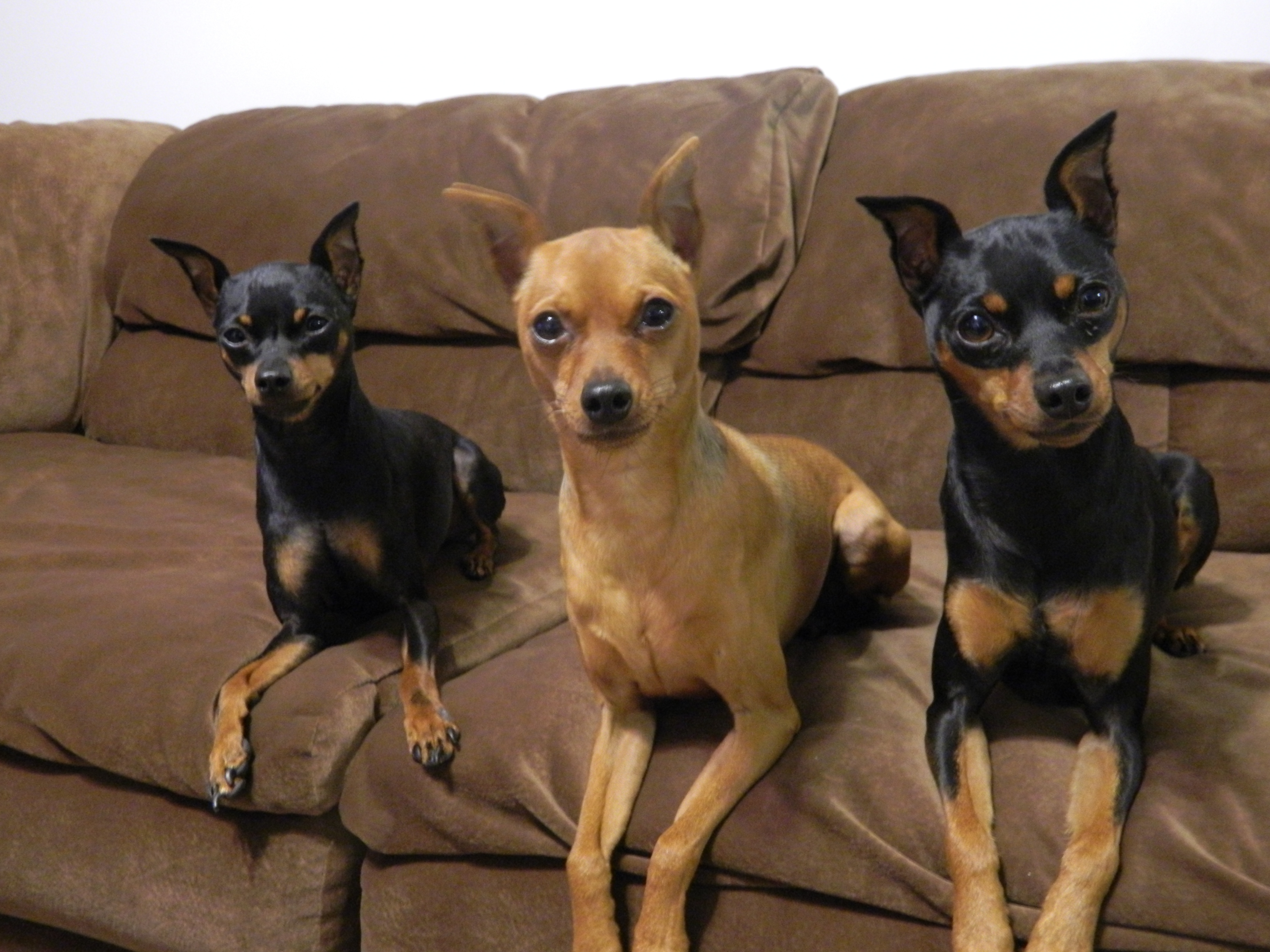
Almost 5 yrs. old – Not snuggling anymore, but willing to sit close together.
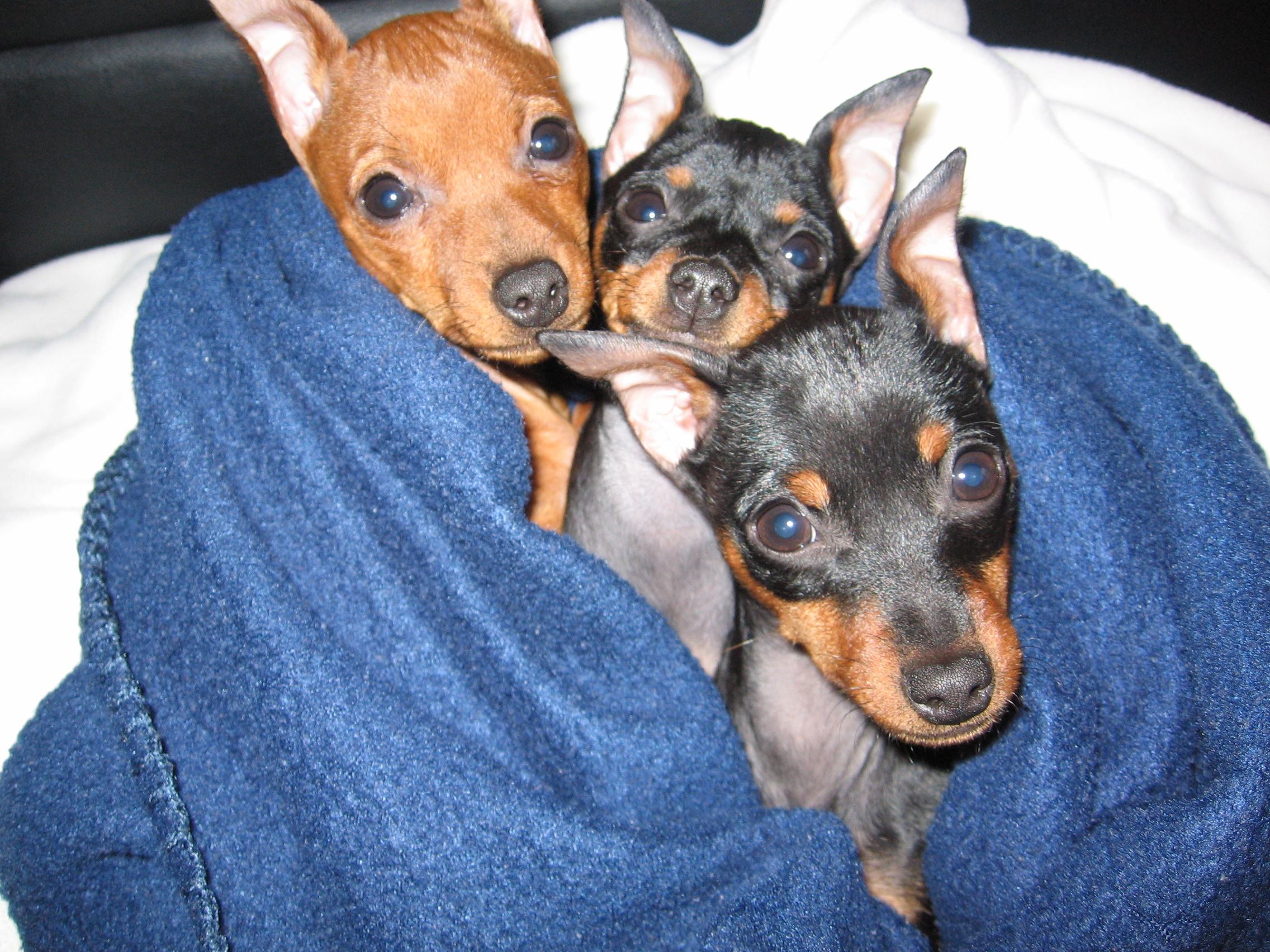
At three months – I loved how the crew would snuggle together as only puppies do.
October 22, 2014
Uncategorized canine anxiety medication, canine social phobia, Dr. Nicholas Dodman, Gentle Leader, holistic veterinarian, hyper-reactive Miniature Pinscher, Pat Miller, Reactive Rover Camp, Tufts University Leave a comment
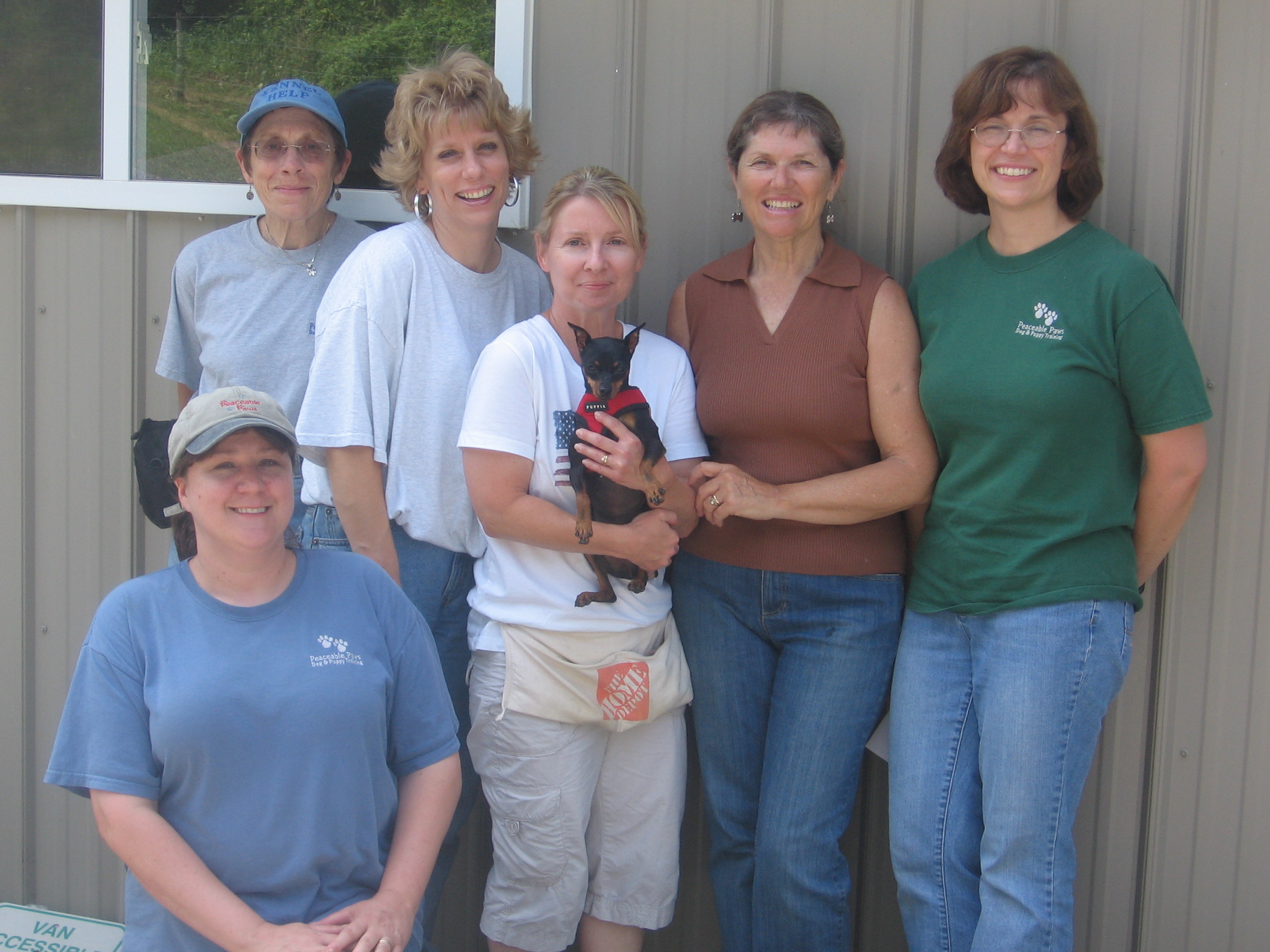
Reactive Rover Camp with Pat Miller & staff
After spending three days at Pat Miller’s Reactive Rover Camp in Maryland, I returned home with Quest feeling more hopeful about her rehabilitation than ever before. Our camp experience had provided me with an invaluable opportunity to observe Quest as she remained calm near other dogs for the first time in her life.
But home is nothing like the safe haven of Peaceable Paws, and I found it impossible to find a place free of stimulating distractions in which to practice our recently honed skills. At camp, Quest was destined for success due to the tightly controlled environment that enabled her to remain below threshold. Unable to recreate the camp setting, my hope for Quest’s progress soon faded.
From post-camp updates, I learned that two fellow camp participants not only lived close enough to practice together, but had access to a secure location in which to meet. I posted requests to see if any past campers lived even remotely in my area, but none did. Quest was able to make amazing progress at camp in three days, and I cannot even imagine how she might be today if we were able to work with Pat Miller on a regular basis or schedule set-ups with other campers.
Six weeks after Reactive Rover Camp, I scheduled an appointment for Quest with the holistic veterinarian. I was ready to see if medication could help reduce Quest’s reactivity. Medicating Quest was the last thing I wanted to do, but knew it may be necessary to help her focus and learn new behaviors. At this point, I felt like we had nothing to lose and everything to gain. After another NAET session with the holistic vet, Paxil was prescribed for Quest.
Apprehensive about giving Quest anti-anxiety drugs, I emailed Pat Miller to hear her thoughts on this type of canine medication. She stated that she would absolutely use meds with her pets if necessary. Pat’s opinion was important to me, but so was that of a veterinary behaviorist. On a whim, I emailed Dr. Nicholas Dodman of Tufts University, providing him with a brief overview of Quest’s behavioral history and inquiring about the safety of Paxil. I was surprised when he returned my email in less than five minutes, assuring me that the medication and dosage were fine for Quest.
Quest began taking the medication and I patiently waited to see any sign of improvement. I was told that it may take up to eight weeks before I noticed anything. Well, that time went by with no change in behavior. The doctor prescribed a new medication. Another waiting period, with no improvement. For about a year, different drugs and dosages were tried, but none reduced Quest’s reactivity.
By now, Quest was about three and a half years old. I decided it was time for her to see a veterinary behaviorist. In August of 2011, Quest and I flew to Boston and met with Dr. Dodman at the Foster Hospital for Small Animals on the campus of Tufts University. After a lengthy consultation, I was told that Quest suffers from social phobia. Finally, a diagnosis!

Quest with Dr. Dodman
Medication was prescribed and I was encouraged to continue with our current behavior modification plan. In addition, Dr. Dodman felt that Quest should be walked with a Gentle Leader because it would give me greater control of her during episodes of reactivity. Wearing a Gentle Leader was a concept that Quest was familiar with and dreaded. I had used it on and off with her and removed it permanently while attending Reactive Rover Camp. At camp, we were given the assignment to list everything that stresses our dogs and avoid those things if possible. The Gentle Leader was included at the top of my list for Quest. Wanting to follow Dr. Dodman’s advice, the Gentle Leader was re-introduced to Quest. Keeping Quest from lunging and spinning is much easier while she is wearing the Gentle Leader, but I hate seeing her so miserable when it is secured on her face.
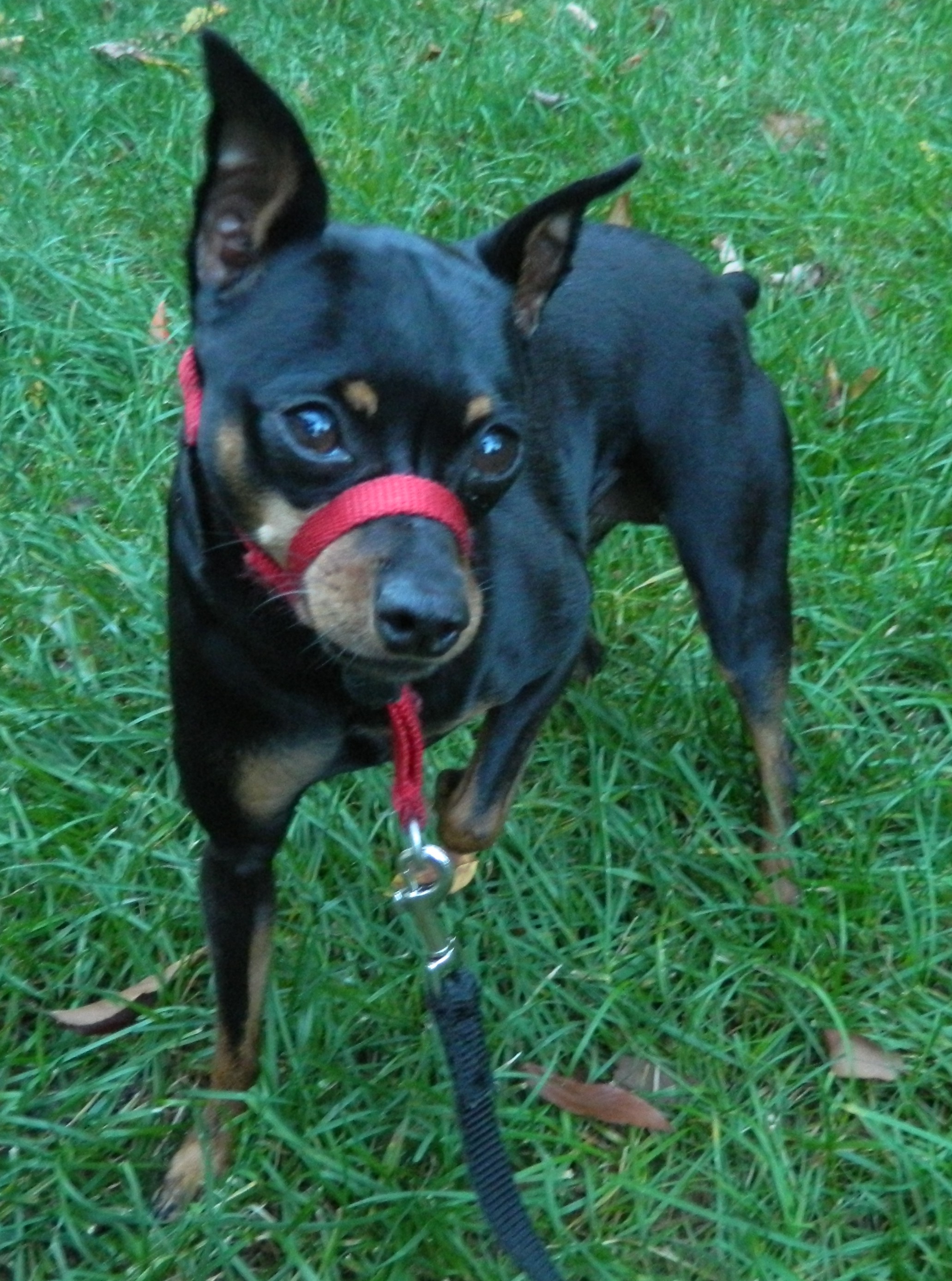
Quest is not a fan of the Gentle Leader.
Unfortunately, the medication prescribed by Dr. Dodman was another shot in the dark. As with the holistic vet, Dr. Dodman tried several different combinations of meds, but no improvement was observed. Quest turned four and was as reactive as ever. Were we ever going to find something that would ease her fear and anxiety?
In the spring of 2012, Quest and I returned to Boston for another meeting with Dr. Dodman. After reviewing the drugs that had been tried with Quest, Dr. Dodman admitted that her lack of response to the meds was atypical. Over the next few months we tried a few other medications, with no luck. In the fall, as Quest approached her fifth birthday, I made the decision to wean her from medication. Since she began taking it, at no point had I observed any improvement. Back at square one, the disappointment and frustration I felt was overwhelming.
Quest’s extreme reactivity was not the only issue that I had been dealing with for the past few years. Trouble had been brewing in our home for some time and reached a boiling point. Quest’s behavior became less of a priority as my worry and concern shifted to a more serious problem. I had always felt that Quest’s behavior was the biggest challenge I would face with my Min Pin crew, but I was wrong.
August 25, 2014
Uncategorized Bach flowers, counter conditioning, desensitization, holistic veterinarian, hyper-reactive Miniature Pinscher, NAET, Pat Miller, Reactive Rover Camp Leave a comment
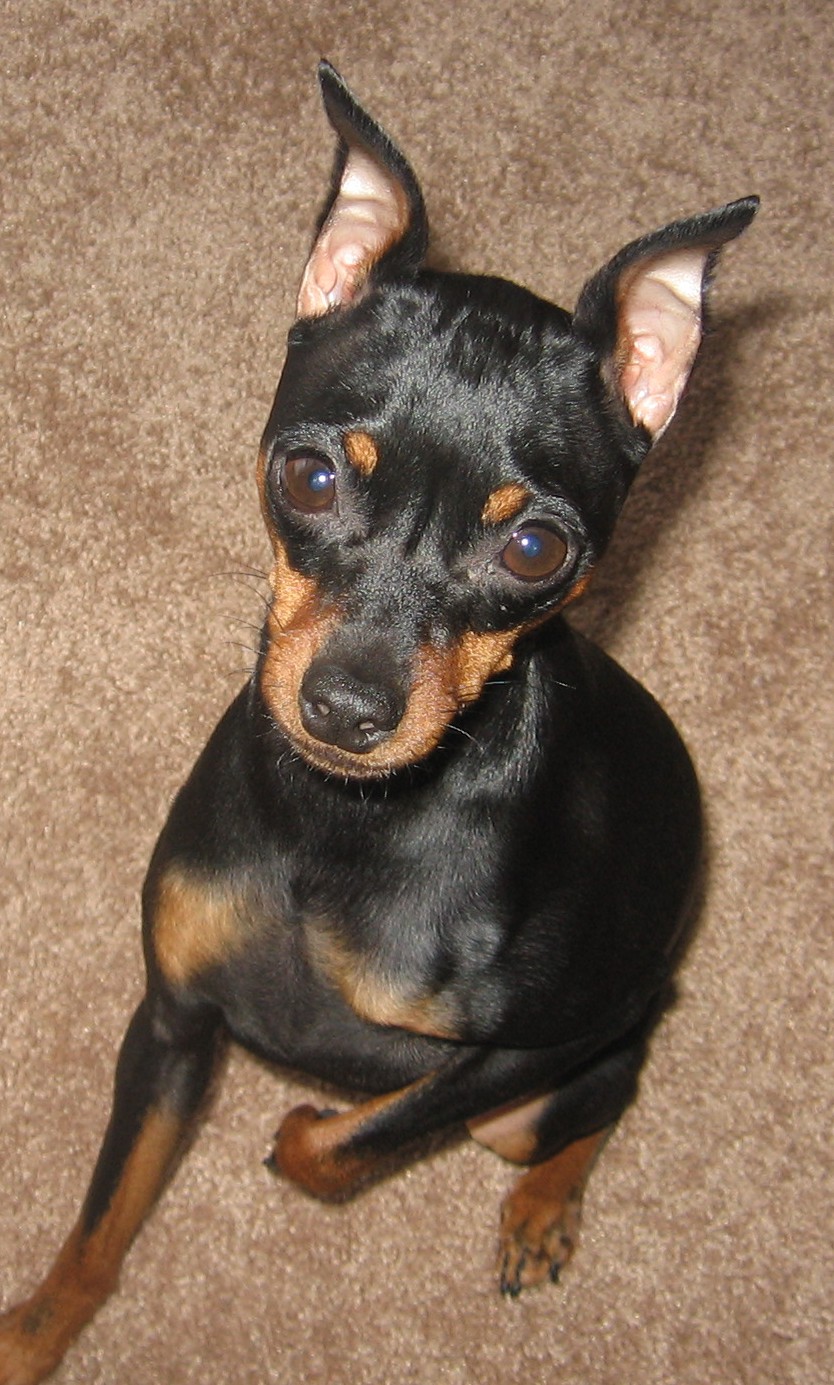
Quest
Weighing less than seven lbs., Quest is my tiniest Min Pin, but don’t let her size fool you. She is a firecracker that goes off with a “Bang!” A complicated canine, Quest is an extremely hyper-vigilant, reactive Miniature Pinscher. My journey with Quest has been challenging, to say the least. Countless times, I have thrown my hands up in the air as a sign of defeat, but I will never give up trying to reach Quest. A realist, I know that Quest will never be “bomb proof”, but hope to teach her that the world is not such a scary place.
I recognized that something was different about Quest shortly after acquiring the puppies. Beginning with “sit”, I began teaching basic commands to the pups within the first couple of weeks. While Aspen and Malibu were fast learners, Quest took much longer to grasp concepts, and it was about six weeks before she had a solid sit.
When the pups turned five months old my husband and I began to see signs of reactivity during neighborhood walks. In a short amount of time, it became too difficult to continue walking all three puppies together. Over time, individual walks, desensitization, and counter conditioning helped reduce Aspen and Malibu’s reactivity to a manageable level. Although identical methods were used with Quest, the results were not the same. The d/cc did nothing to reduce Quest’s reactivity, and she would bark, lunge, and spin whenever she spotted a dog.
There was no denying that I was in over my head. Quest was clearly a special dog with issues that I did not know how to address. By now, the dogs were almost two years old and no progress had been made with Quest. Beyond frustrated, I continued searching for ways to alleviate the anxiety and fear that accompanied Quest whenever we left the house.
Although I like and respect my dogs’ veterinarian, I decided to take Quest to a holistic vet to see if there was anything he may be able to do to decrease her anxiety. At our initial appointment, Quest had her first NAET (Nambudripad’s Allergy Elimination Therapy) session and continued to have this form of treatment at each visit. While I don’t feel that NAET benefited Quest, my online research showed that others (canine and human) have had improvement in both physical and behavioral conditions after receiving this form of therapy. Bach Flower therapy was also recommended, so I purchased various combinations of this liquid form of flowers. A chart illustrates all of the Bach Flowers and the specific behaviors that may be improved through their usage. Either I ordered the wrong formulas, or this too was another step in the wrong direction. After several weeks with no improvement, the doctor began Alpha- Stim treatment and let me rent a unit for use at home. Yet again, I was disappointed at the lack of results. Low Level Laser Therapy was the last holistic treatment that Quest received before I decided that this vet may not be able to “cure” Quest as I had desperately hoped.

Alpha-Stim Therapy
Quest turned two years old and continued to be a puzzle that I could not solve. I was excited to learn about a Reactive Rover class that was beginning soon at a dog training facility about an hour away. Wasting no time, I signed us up immediately. Every Sunday for eight weeks Quest and I attended class with about five other reactive dogs and their owners. Desensitization and counter conditioning were the main techniques taught by the instructor and was a reinforcement to the foundation work I had previously done with Quest. Teaching calming behaviors to our dogs, including mat work and Relaxation Protocol, was another aspect of the class. Being the only small breed dog in the class, Quest was dwarfed by the much larger dogs. The barks of her classmates matched their sizes, some being ferocious and scary! This was the first time I appreciated Quest’s less intimidating bark.
Unfortunately, Quest did not do well in her Reactive Rover class. She barked a lot and truly demonstrated that she was indeed a reactive rover. Most of the other dogs were not quite as vocal as Quest and seemed to show improvement over the two months. Again, I was frustrated at our lack of progress. The instructor annoyed me during the last class when he stated, “You must be rewarding Quest’s barking for her behavior to continue without improvement.” I didn’t realize it at the time, but later understood why Quest was not successful in that environment. She was either on the verge of, or over threshold, the entire time we were at class. A dog like Quest cannot learn in that kind of environment. I was expecting something from Quest that she was simply unable to give.
For Quest to overcome her issues she needed to be exposed to dogs in an environment that could be tailored to her specific needs. Further “reactive dog” searches led me to Pat Miller’s website. I learned that Pat Miller would be conducting a Reactive Rover Camp in late June at her training center in Hagerstown, MD. The description of the camp appeared to be exactly what I was looking for in my endeavor to help Quest. First and foremost, Pat’s training methods were based on positive reinforcement. Further, every detail, from arrival to departure, was carefully planned in order to keep the campers (human and canine) as stress free as possible. A required reading list included authors Karen Pryor, Jean Donaldson, Patricia McConnell, Pam Dennison, and, of course, Pat Miller. A diligent student, I completed the homework prior to camp.
Over the course of three days, Pat provided camp participants with invaluable lessons on everything from behavior modification to emergency escape plans. Pat proved to be a top-notch instructor who utilized various formats to educate my fellow campers and me on how to rescue our reactive dogs from the fears that have taken over their lives.
“Don’t give pennies when you need hundred dollar bills”, Pat advised us during one of our camp lectures. Since hearing that tidbit of information, I have utilized it on a regular basis when training my Min Pin crew. Whenever you “up the ante” with your dog by training in a distracting setting, or even teaching a new trick, you need to reward behavior with treats of the highest value. Therefore, don’t give plain, boring kibble when you need a juicy filet mignon!
Field work was my favorite component of Reactive Rover Camp because it allowed Quest (and me) to practice real-world situations while remaining sub-threshold. That was a first, for us! For our final camp activity, Pat had all of the campers and their dogs walk figure eights around an arena. Quest’s participation in the walk was nothing short of amazing. She remained calm even though we were surrounded by dogs! I cannot thank Pat enough for designing a program that allows dogs like Quest to achieve success in such a short amount of time.
Reactive Rover Camp with Pat Miller and staff
As camp concluded, Pat stated, “Quest started on Friday as perhaps the most reactive of the crew, and ended up a superstar! Attending Pat’s camp not only enhanced my knowledge of d/cc and supplied me with management skills, but also empowered me with a much-needed boost of confidence and gave Quest the chance to shine. The Reactive Rover Camp experience was the best thing I have done to help Quest thus far in our journey. I returned home from camp with a renewed sense of commitment towards Quest’s road to rehabilitation.
To be continued…
August 18, 2014
Uncategorized cautious canine, multiple Miniature Pinschers, reactive dogs Leave a comment
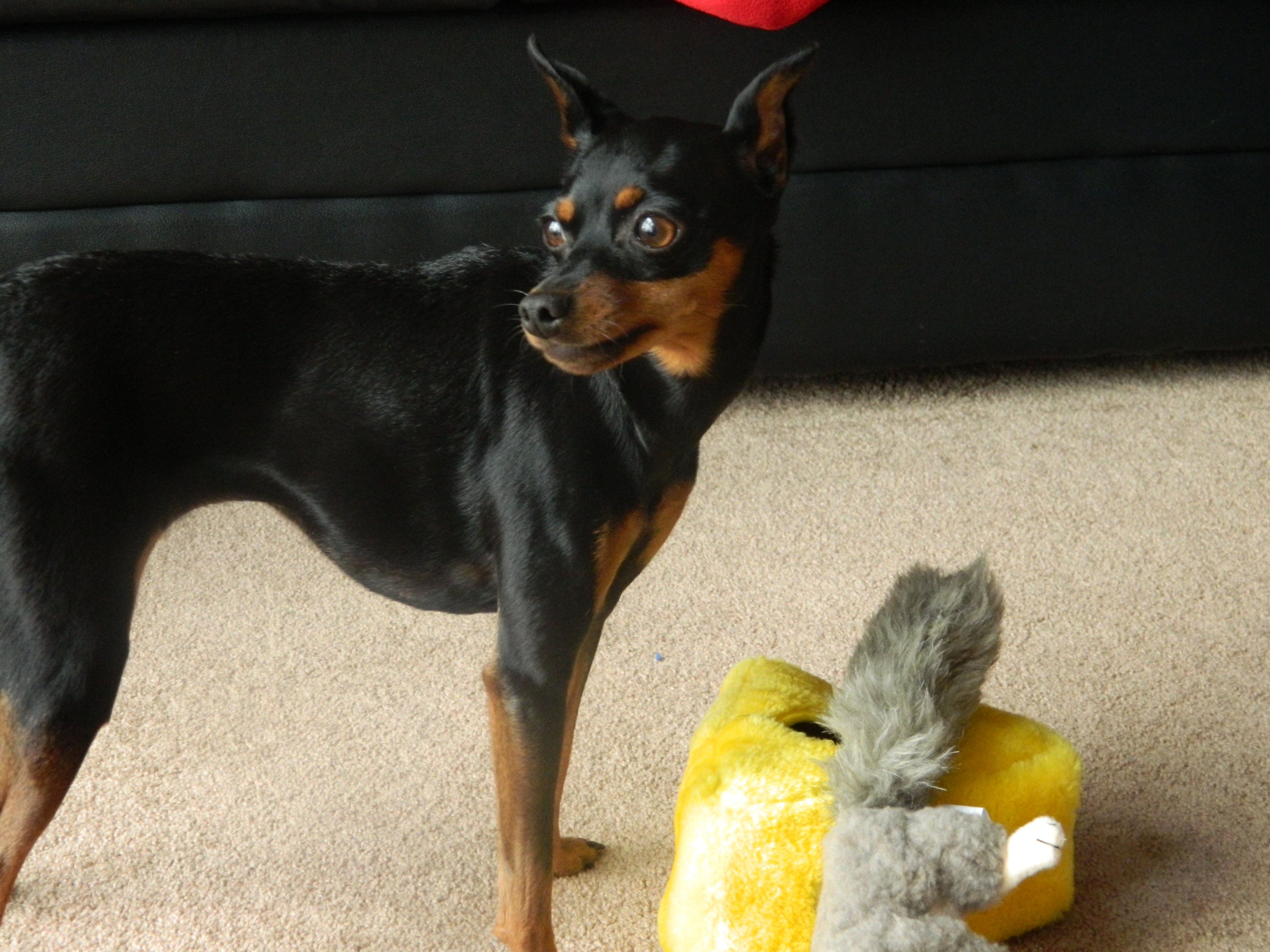
Malibu
Malibu came into my life purely by chance. Originally, my husband and I were only taking two Min Pin pups out of a litter of three. It was only at the last moment that we changed our minds and said, “We’ll take the third puppy, too.” Call us crazy, but it is a decision that we will never regret.
Malibu is my cautious canine. Highly suspicious of strangers and extremely wary of most dogs, Malibu prefers to keep a safe distance between herself and anything that she deems to be a threat. New situations and sometimes even familiar ones tend to stress Malibu.
Since puppyhood, Malibu has been reserved, even standoffish, towards people. She took much longer to warm up to me than the other two in her litter. Even today, Malibu is not a cuddler, preferring to sit next to me than on my lap.
At home, Malibu is the quietest of my girls. Even when my other two are barking up a storm, Malibu usually chooses to remain quiet. A clever dog, Malibu enjoys being challenged and learning new skills. Of my three Min Pins, Malibu is the one who grasps new concepts the fastest. She seeks stimulating activities and one of her favorite things to do is play with her doggie puzzles.
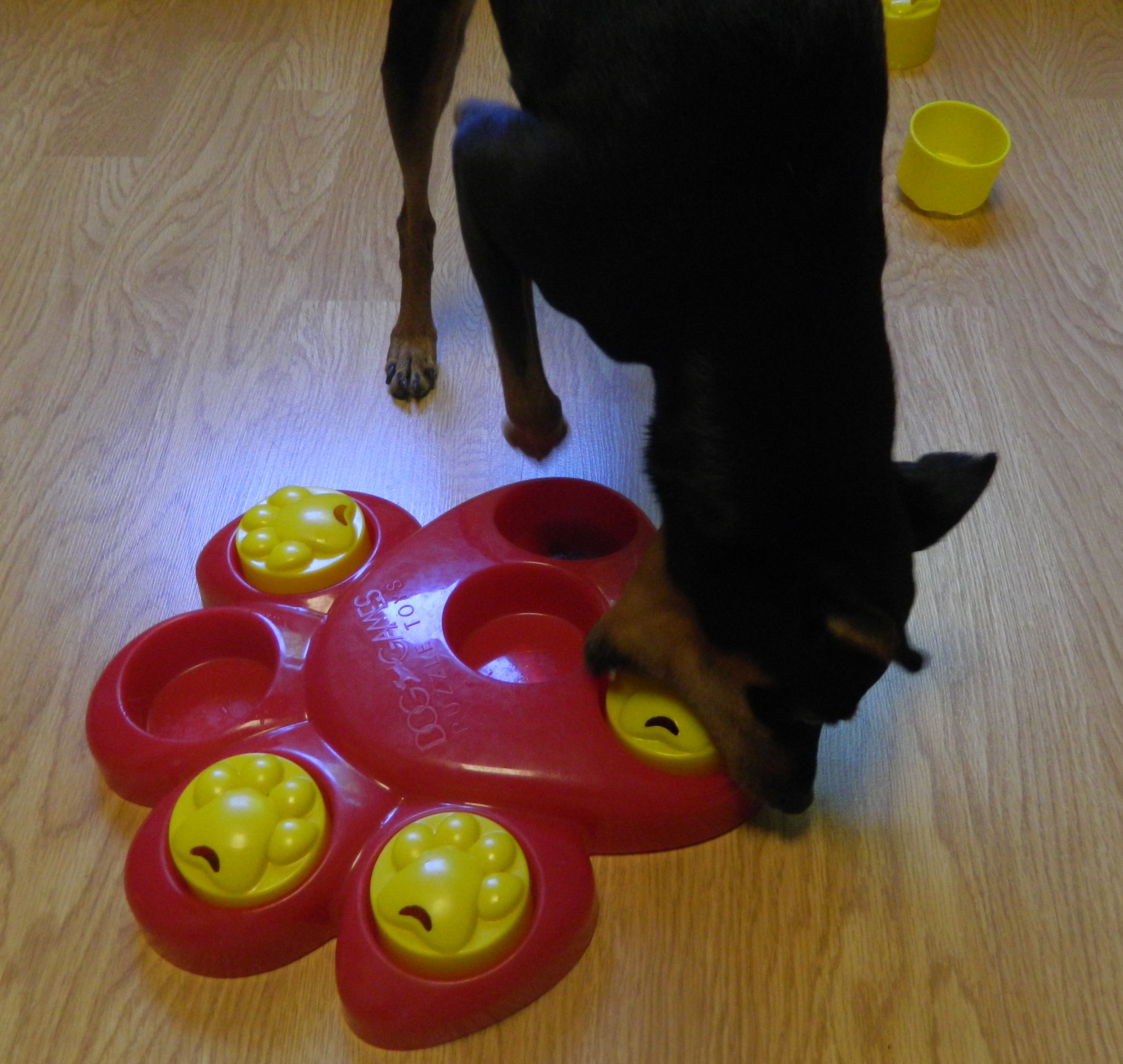
Puzzle Time
Walking with Malibu requires dialogue, specifically, “No”, “Drop it”, and “Leave it”, since she likes to put everything in her mouth. Management is also required to keep Malibu from becoming reactive at the sight of her triggers: certain vehicles, bicycles, skateboarders, strangers, and dogs. For a long time, Malibu would lunge at any passing vehicle. As with Aspen, behavior modification has helped decrease Malibu’s desire to react, but the inclination is always there, especially if I let my guard down. Yummy treats provide a great distraction for Malibu and keeps her focus on me.
Although riding in the car is a regular event for the crew, Malibu is usually anxious during car rides and lets us know how she is feeling with an annoying whine or whistle. She continuously surveys her surroundings as if waiting for a monster to jump out from under the seat.
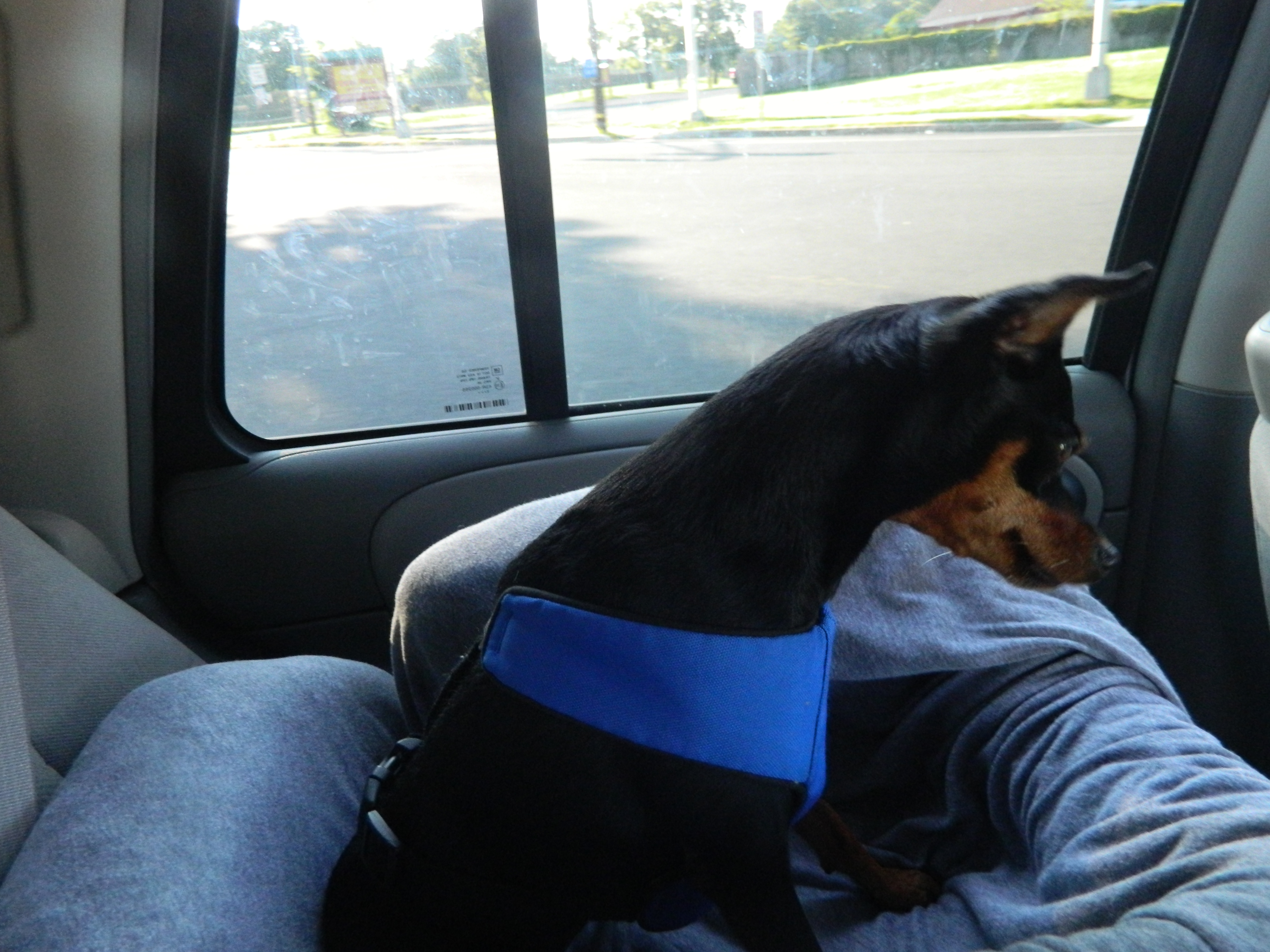
Is something down there?
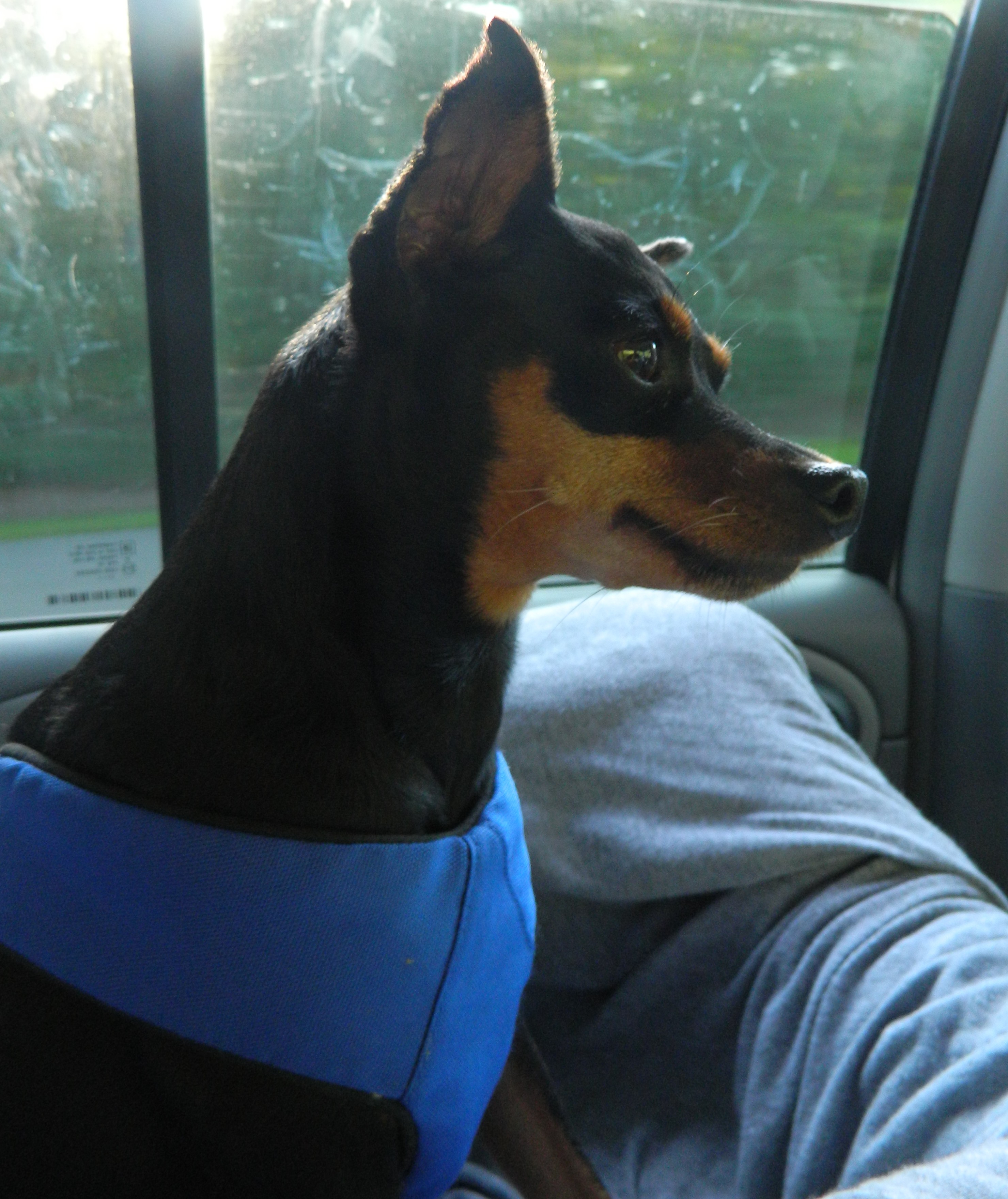
Scaredy Dog
While driving, if we pass anything that sets Aspen and Quest off, Malibu just sits quietly. Maybe Malibu is conserving her energy because she is the one who reacts if anyone comes too close while we are parked. Malibu will bark, lunge, and basically make a spectacle of herself if I fail to capture her attention before she erupts. When the crew is getting out of the car, Malibu is my Min Pin who makes sure that everyone within a five-mile radius knows our exact location. To my embarrassment, her shrieks pierce the air for the first few moments until her initial excitement subsides.
A little joker, Malibu’s silly Min Pin antics provide me with comic relief. In the morning, if I don’t get out of bed quick enough, Malibu is the one who will pull the blankets off of me. Of course, while it is happening, I see no amusement in that particular talent, but always laugh about it later. Malibu also loves a game of Catch Me if You Can when she has gotten her paws on something of mine. I adore the way Malibu play bows and wiggles her butt when she is ready to have some fun.
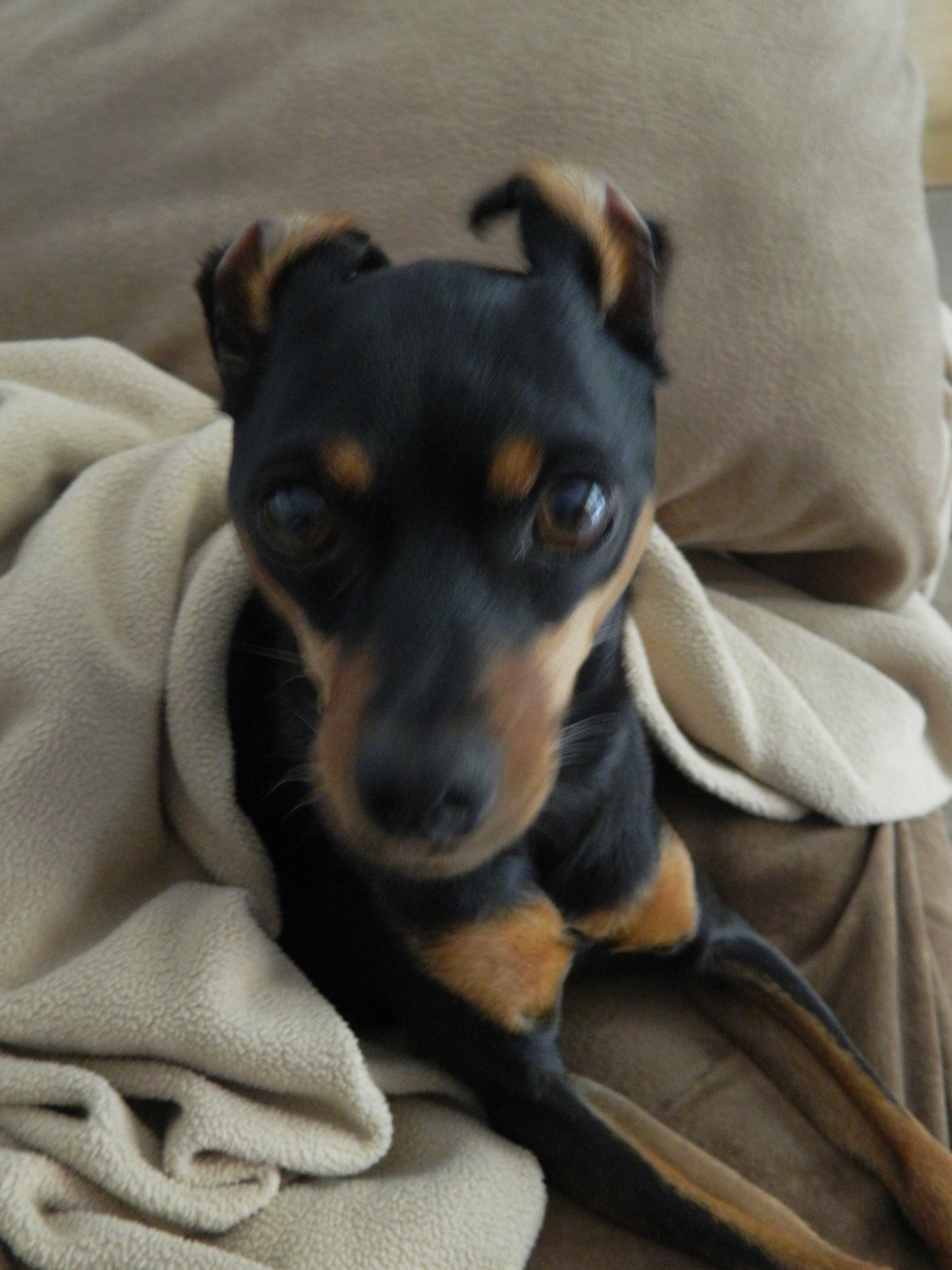
Malibu shows off a trick that she can do with her ears.
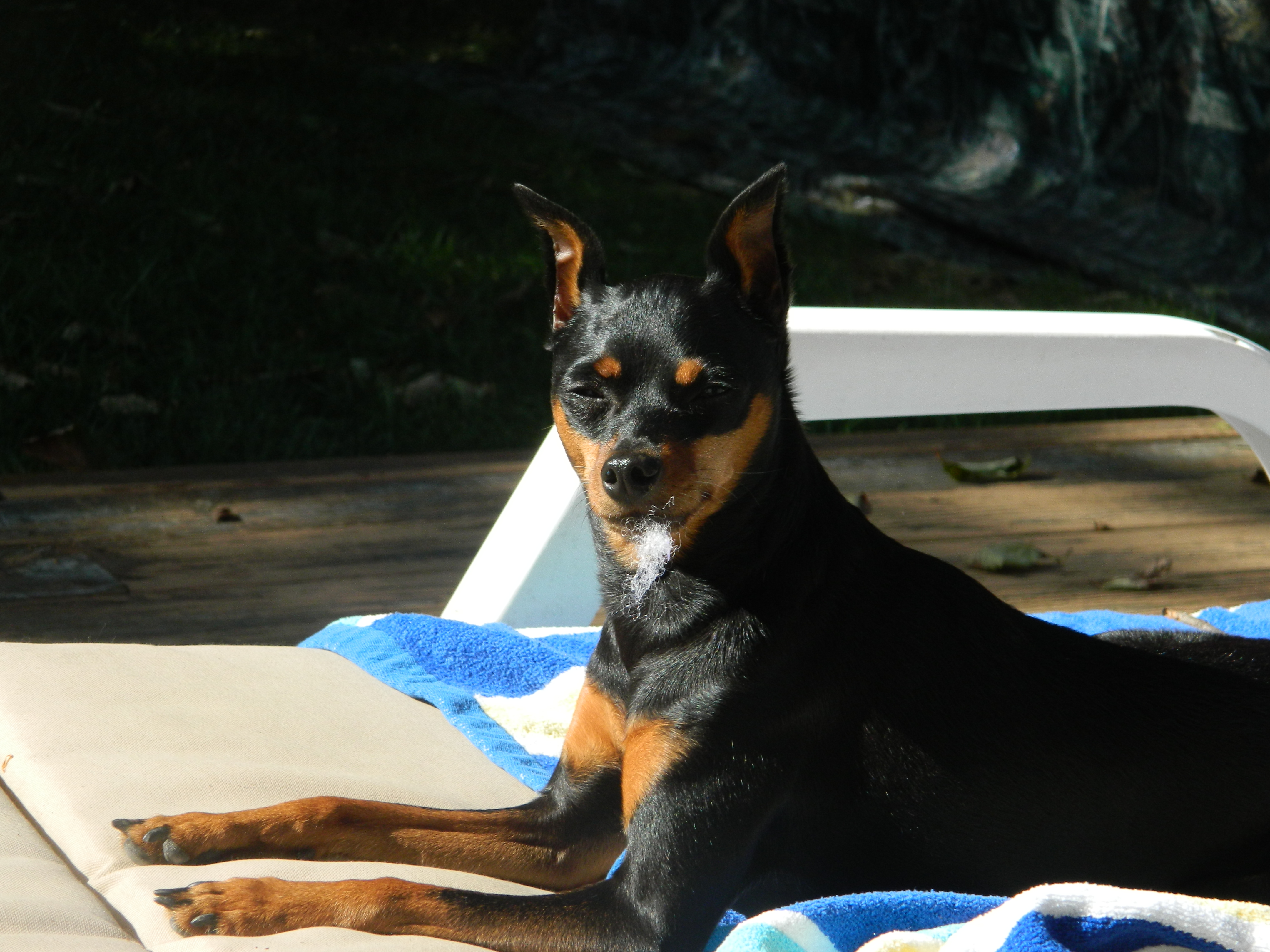
Malibu like to dangle things from her mouth and wait to see how long it takes before I notice.
Out of my crew, Malibu seems to be the least complicated dog. Sure, she has her quirks, but most of the time they are easier to deal with than those of my other two. The spontaneous decision to take Malibu with the other two pups was one of the best decisions of my life. Malibu and I share a special bond and she will always be my buddy.
August 11, 2014
Uncategorized barking, Behavior modification, Kathy Cascade, Miniature Pinschers, reactive dogs, rehabilitating reactive dogs, TTouch 2 Comments
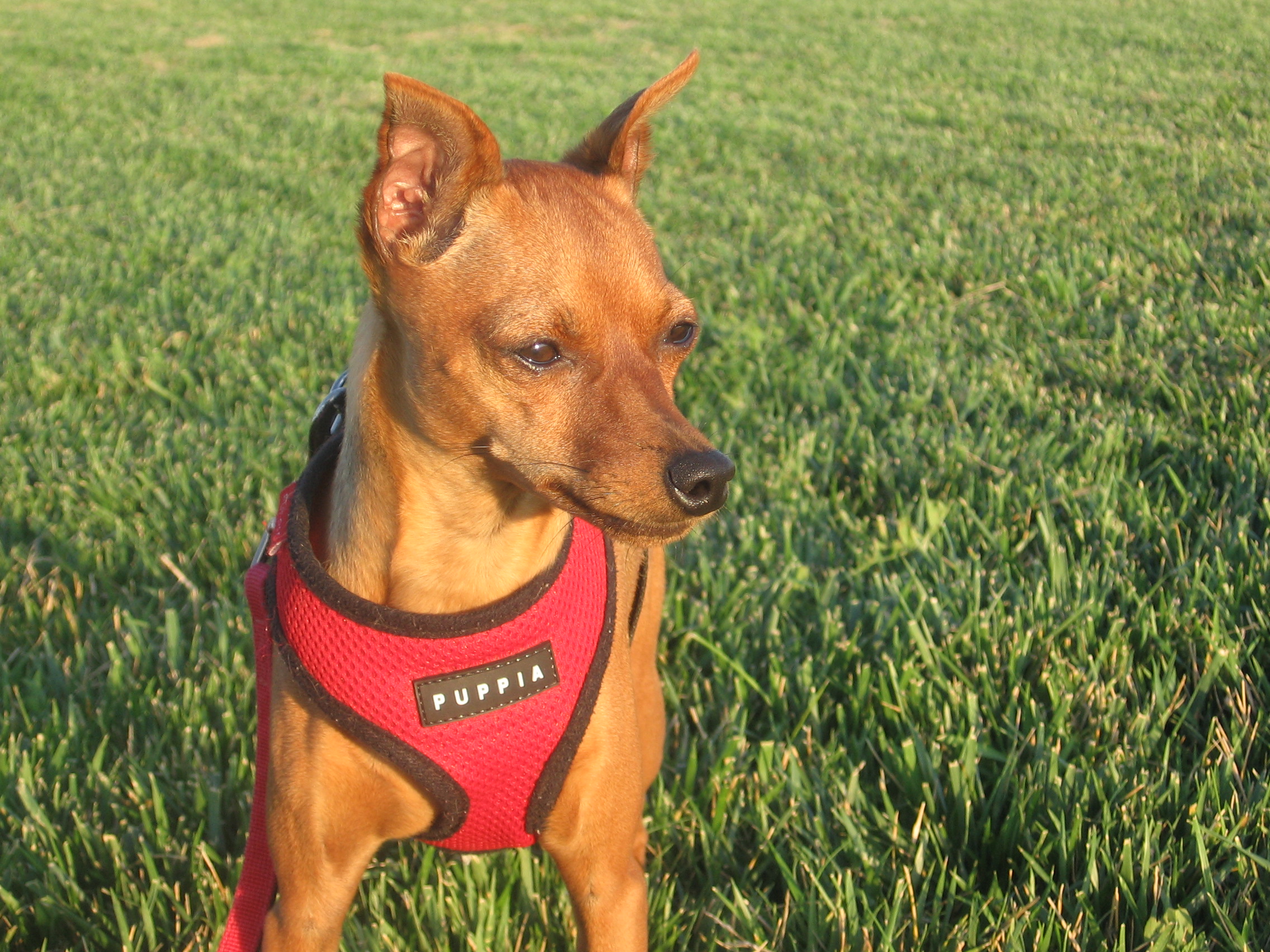
Aspen
Aspen is my most affectionate Min Pin. She loves to cuddle and wants to befriend everyone she meets. Aspen is an amazing athlete and truly fearless when running her backyard agility course. Always eager to play Frisbee, she performs fancy flips in the air while enjoying her favorite game. Aspen seems too good to be true, right? Well, truth be told, Aspen has issues.
Aspen is the noisiest of the crew, and at times, her incessant barking has me at my wit’s end! At home, she is the Min Pin who needs the most management. During her barking frenzies, I attempt to distract her by redirecting her attention elsewhere. Fortunately, food is a great motivator!
Aspen shows a different side of her personality when out in public. Her leash behavior is far superior to my other Min Pins. Aspen walks politely and remains calm, even when people and/or dogs are spotted. If anything, Aspen will whine to go and greet those she sees while out and about. Usually, I cannot give in to her request because Malibu is walking with us and likes to keep distance between herself and other dogs/certain individuals.
Aspen did not always behave appropriately in public. Years of desensitization and counter-conditioning helped Aspen overcome many of the reactive tendencies that were present when she was younger. Although behavior modification continues to be a key component of my dogs’ rehabilitation program, it is not the only method that I have used in an effort to help my dogs.
While researching different strategies for my Min Pins’ reactivity, I came across Tellington Touch. Tellington Touch, or TTouch as it is commonly referred to, is a unique, force-free approach that addresses specific physical and behavioral needs of pets through the use of TTouches, Leading Exercises, and a Confidence Course.
In July 2010, Aspen and I went to Ft. Collins, CO to attend a TTouch workshop. I had met the presenter, Kathy Cascade, a few months earlier while she was conducting a training seminar here in New Jersey. I chose Aspen to accompany me since she is my Min Pin who can best handle the stress of traveling and being around other dogs.
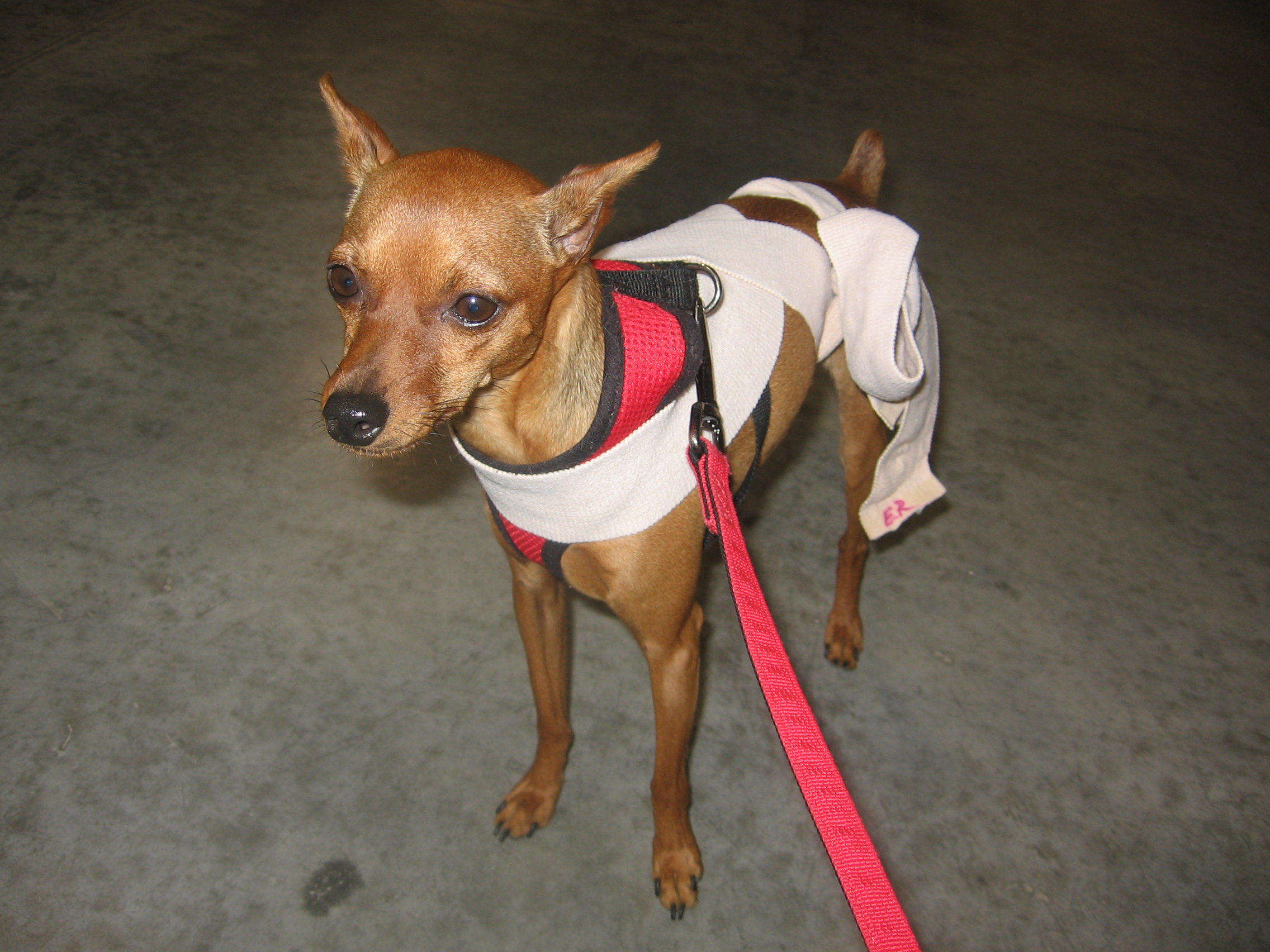
At the workshop, I learned how to apply a bodywrap to calm Aspen.
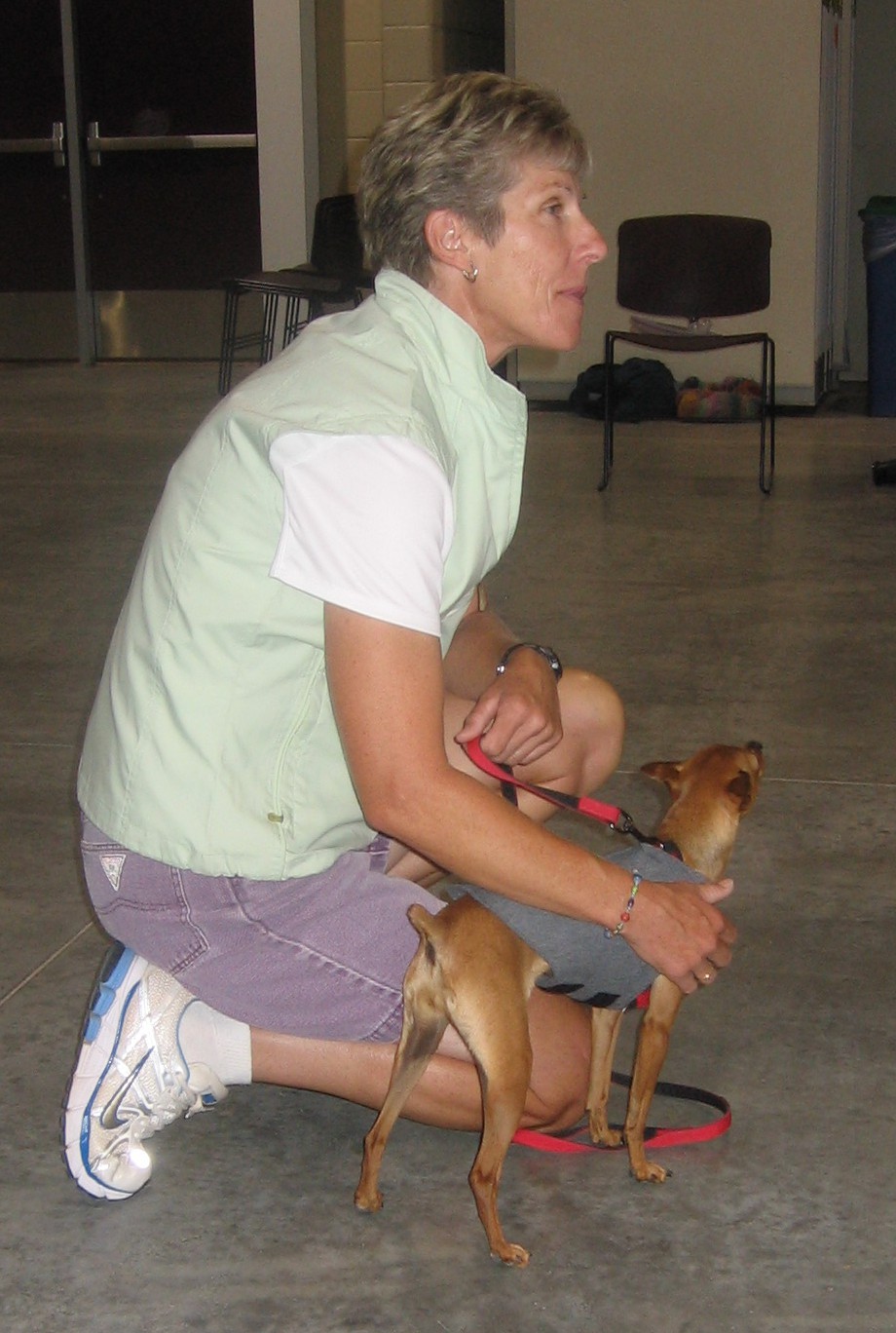
Aspen was selected to be the demo dog for the Thundershirt.
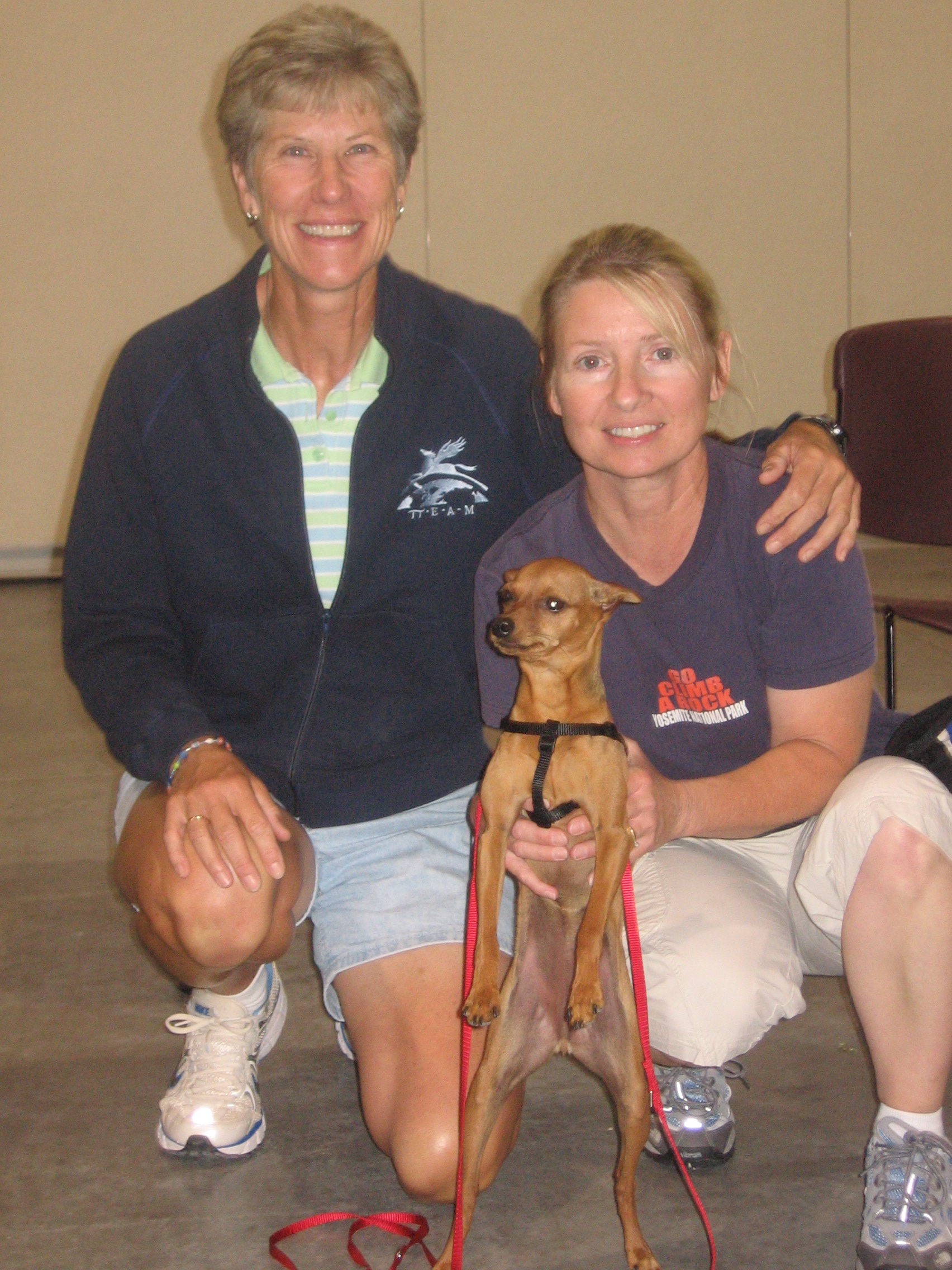
Kathy Cascade, TTouch instructor (left side)
The TTouch workshop was an enriching experience that provided me with fresh ideas to use with my reactive Min Pins. Kathy is an experienced instructor whose caring nature is evident as she strives to assist her students and their pets. Kathy’s calm and patient nature provides dogs with a sense of security as she works with them on their individual needs.
While discussing Aspen’s penchant for barking, Kathy helped me see the situation from a different point-of-view. She reminded me, “Aspen is just barking.” That statement may be the single most important piece of information that I took away from the workshop. Yes, barking can be very annoying (I am hearing it now, as I type!), but there are other canine behaviors that make my situation seem like a picnic in the park. I met a fellow workshop participant who had a dog with such severe aggression that she was considering euthanasia for her pet. Considering her story, my problems are nonexistent.
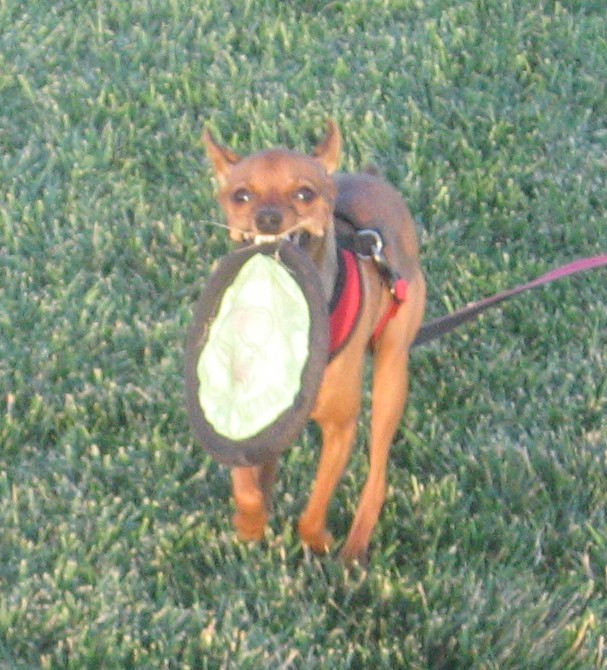
While in Ft. Collins, Aspen enjoyed a game of Frisbee at Fossil Creek Park.
In addition to over-the-top barking at home, Aspen has a conflicted relationship with Malibu that has escalated over the past couple of years. Unprovoked, Aspen will intimidate and threaten Malibu for no apparent reason. Aspen will growl, lunge, and pounce on Malibu without warning. A visit to a veterinary behaviorist was long overdue, so an appointment was recently scheduled and off we went. The details of our meeting will be the topic of a future post.
Aspen has a few character flaws, but the good definitely outweighs the bad. I have learned that the most productive way to deal with her barking is through management. Some dogs just like to bark more than others and Aspen is one of those dogs. As far as tension among the crew, Malibu may never be Aspen’s best bud, but if I can keep the situation down to a dull roar until a solution is found I will be satisfied. Aspen may be a handful sometimes, but at the end of the day when she snuggles next to me and lays her head on my pillow, I am very grateful to have her in my life.
July 26, 2014
Uncategorized Miniature Pinschers, multiple dog household, rehabilitating reactive dogs 2 Comments
For the past six years, I have been on a journey. My destination is a long way off, perhaps unreachable, but I continue heading toward it because it is the only direction I can go. This journey of mine has taken a toll on my body, mind, and spirit. “I can’t do this anymore – I give up”, has been declared countless times. But I can do this – because I have to.
Making the decision to rehabilitate three reactive Miniature Pinschers is an undertaking of epic proportions. It requires a commitment of vast amounts of time and energy, as well as patience and perseverance. For me, this was never a choice, but a responsibility that was owed to my dogs.
The rehabilitation of reactive dogs is a long, arduous process, and my journey has been a continuous uphill trek from the beginning. For starters, Miniature Pinschers are extremely hypervigilant dogs, and mine have the watchdog act down to a science. Always on high alert and extremely wary of strangers, the traits of a Min Pin appear to be the perfect ingredients for reactivity. Not only do I have one of this breed, but a litter of three!
Pack mentality has also been a roadblock to progress. It is difficult enough dealing with one reactive dog, but when you are attempting to train a trio, it raises the challenge to a whole new level. As discussed in a previous post, Reality Barks, one of my greatest enemies has been the doggie domino effect.
I realized early on that my crew would need specialized training if we were to have any hope for success. But what did I know about dog training, let alone the kind of training that would be required to rehabilitate my dogs? The puppy training books that I had read were useless since they did not discuss the reactive behaviors in which I was dealing. What I needed was a manual that focused on raising multiple reactive dogs. Well, as it turns out, none exist.
Educating myself was the first step in attempting to meet the unique needs of my dogs. Searching the Internet, I found articles and books that focused on specific canine behavioral issues. The concepts and methods presented are geared towards fearful/reactive dogs who require more than basic obedience training. Authors including Pat Miller, Leslie McDevitt, Patricia McConnell, and Jane Killion became my mentors, while Amazon became my new best friend as I amassed a collection of books that would rival your local public library.
With my guide books in hand, I began the monumental task of rehabilitating my reactive dogs. Progress has been painstakingly slow, and regression is too frequent. I have taken wrong turns, encountered detours, and reached dead-ends while on this journey. Frustration and exhaustion have become second nature and are a part of my everyday life.
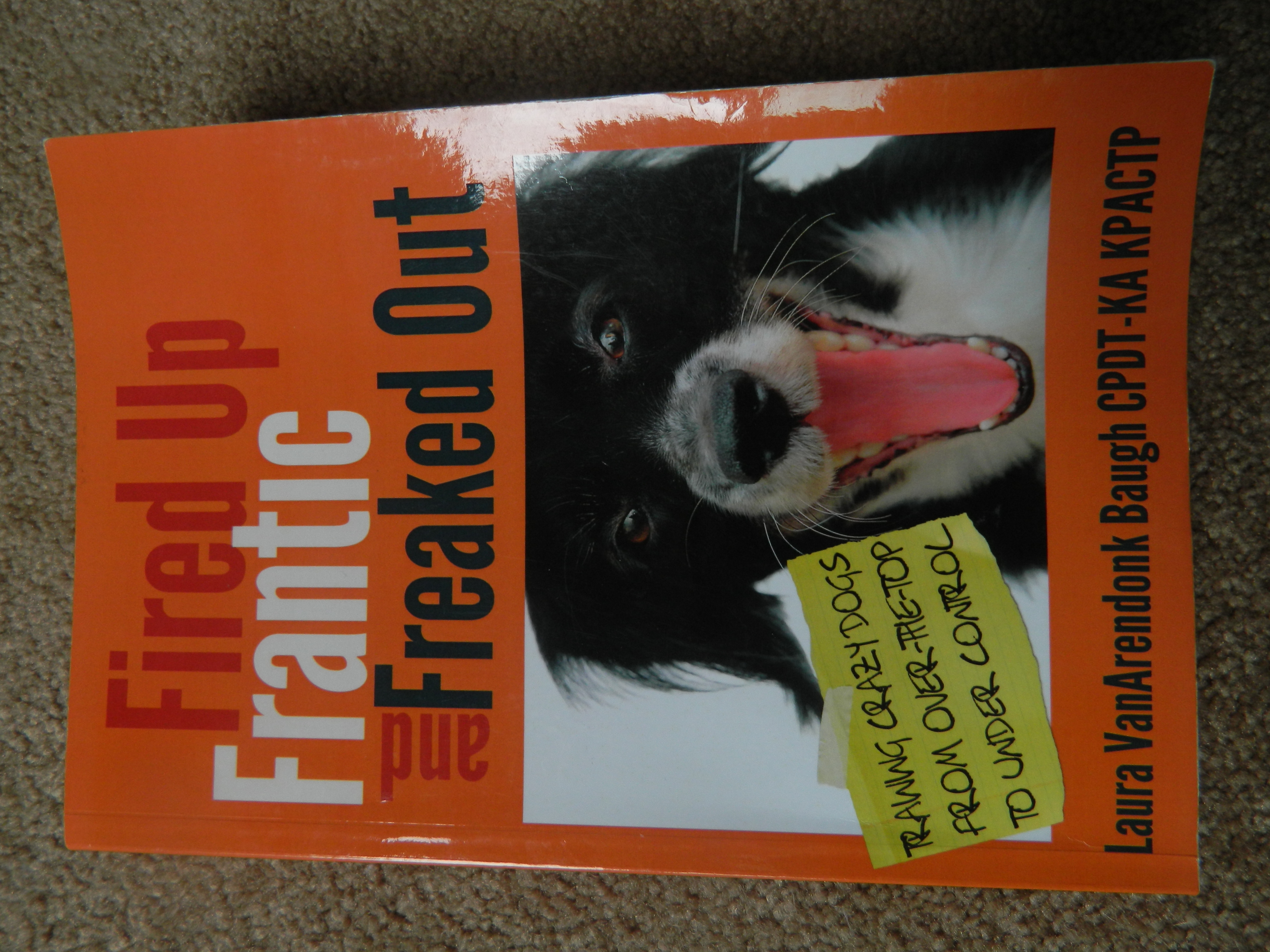
Currently, I am reading Fired Up, Frantic, and Freaked Out by Laura Van Arendonk Baugh. A true gem, this book first hooked me with its title which seemed to capture the very essence of my Min Pins. The theme of this book is “training crazy dog from over-the-top to under control”. This recent addition to my collection may become my bible!
Always a realist, I know that my dogs will never be “bomb proof”. After all, they are Miniature Pinschers! As I continue striving to rehabilitate my dogs, I try to remain optimistic about the future. The road I am on stretches before me, so I will keep walking forward with faith, determination, and three Min Pins by my side.
June 30, 2014
Uncategorized reactive dogs, traveling with multiple dogs 2 Comments
My favorite time of the year has arrived – school is out and it is the start of summer vacation. I should be preparing for a trip, but I am not. Since acquiring my Min Pin crew, traveling has taken a back seat. It’s not that we can’t take a trip, but it would not be worth the aggravation and stress that would be packed along with our luggage.
Reactive dogs change the way you live. Things that were once simple, such as a neighborhood stroll, become more complicated than you can imagine. Things that you did with little thought now require careful planning with every detail micro-managed. I love my dogs, but miss the life I used to have. Traveling is one of the things that I miss the most. For many years, a summer trip was on the agenda. Bob and I traveled all over the country, with our choice destinations being California and Colorado.
When the crew was about seven months old, we took them with us on a trip to Colorado. The vacation had been planned shortly after bringing the pups home. Including our dogs on a vacation seemed perfectly normal to us since our first Min Pin, Twinkie, went everywhere with us. Two months prior to the trip, the girls began showing signs of reactivity. I was not worried because I figured that once school was out, I would have a couple of weeks to train them and get everything under control before the trip.
Well, my head must have been in the clouds! It is now six years later, and the girls are still running the show. Sure, there have been improvements, but I am consistently challenged by their reactive behavior. If I knew then what I know now, I would have laughed out loud at my naivety. We are talking about multiple dogs with pack mentality. Each dog would need to be trained individually before training in pairs, and finally as a group. Due to Quest’s hyper-reactivity, we have yet to reach the group phase!
I was extremely nervous the day of our departure. As the plane taxied down the runway, I remember thinking, “This may have been a really bad idea. We are taking a trio of reactive puppies on a vacation!” Aspen and Vail were two of the towns we would be visiting, and having been to both before, we knew it would not be easy to avoid seeing dogs.
Since the girls were still puppies, we brought along a stroller for crowded areas and when a lot of walking was planned.
Vail, Colorado
We tried our best to avoid dog sightings, but were not always successful. A barking frenzy would erupt anytime a dog was spotted, much to our embarrassment. The girls did have romps in local parks, but only after we scouted them first to be sure we would not have any unexpected meetings with fellow canines.
Early morning walks were another way to avoid seeing too many dogs. Rising at the crack of dawn (while Bob slept in!), I would take one girl at a time for her morning walk. This was a practice I began back home once the reactivity seemed to be here for the duration. I quickly learned that one reactive dog is easier to handle than three.
In addition to walks, the girls also needed time to run and play leash-free. Bob and I came up with some creative solutions that gave the girls a chance to have fun on their vacation. Isolated tennis courts and empty soccer fields became playgrounds for the girls.
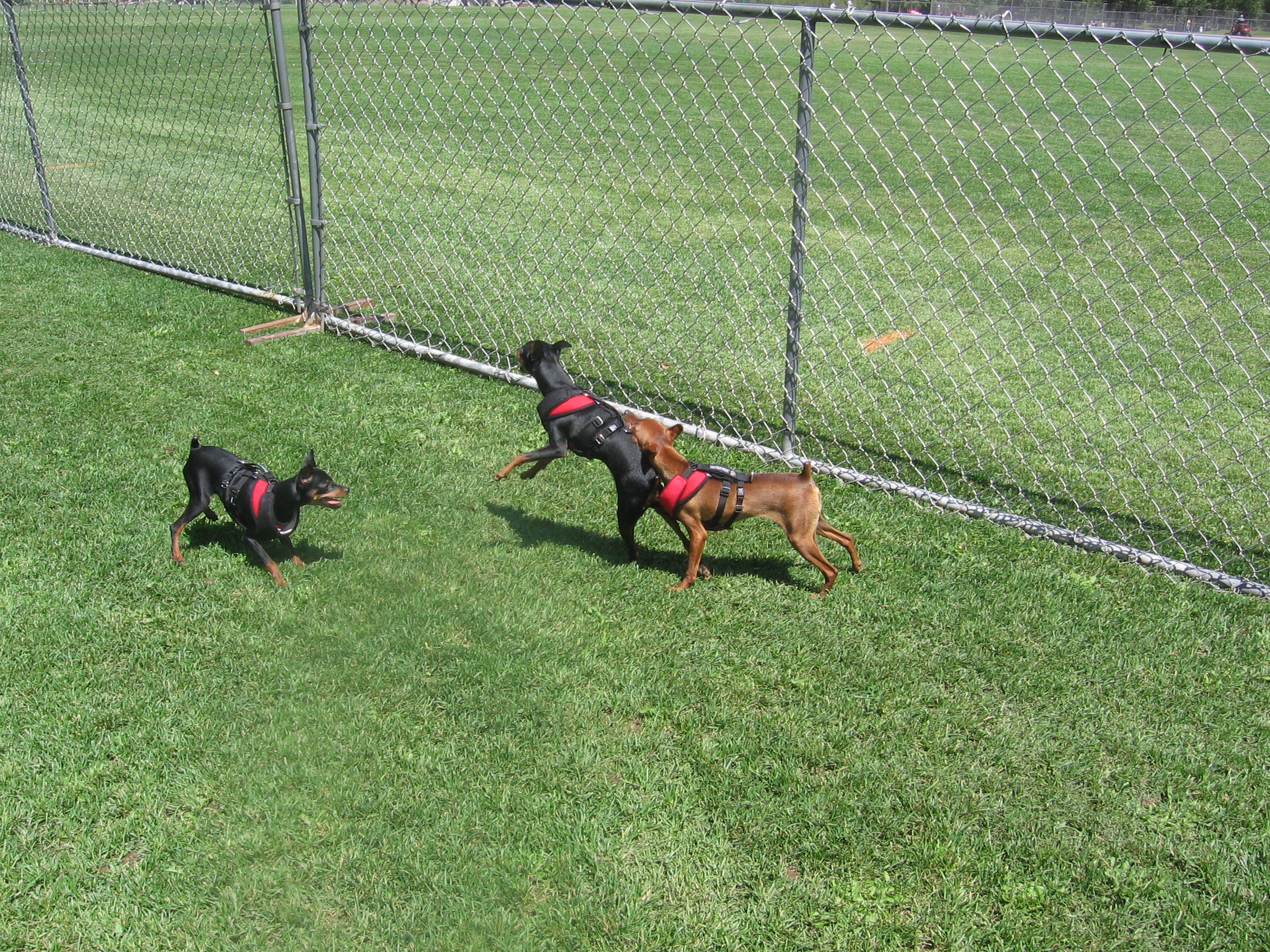
The girls enjoyed playing on a soccer field in Telluride (until Malibu escaped and Bob had to chase her down!)
Bob and I had puppy-free time in the evenings. Since the girls were crate-trained, we could leave them at the hotel for short periods of time while we went out to dinner. The girls were usually exhausted by the end of the day and happy to rest in their crate.
One of the biggest vacation disappointments was not being able to participate in a Race for the Cure event in which we were registered. Months earlier, when I realized that we would be in Aspen while it was taking place, I signed us up for the dog walk portion of the event. Wearing our Race for the Cure shirts and with the girls each sporting a pink ribbon bandanna, we arrived at the location. We had the girls in the stroller, but planned to take them out and let them walk. Well, we weren’t there for five minutes before all hell broke loose. As soon as our girls spotted a couple of dogs, the barking and shrieking began. Of course, everyone turned to see the cause of the commotion. Red-faced, Bob and I made a hasty retreat before our girls completely lost their minds. So, knowing that the crew is dog-reactive, why did I sign us up for a walk where they would see multiple dogs? Wishful thinking, maybe? I really wanted to participate in the event and hoped that things would go smoothly. You would think that a lesson would have been learned here, but in the past six years, I have really had too many wishful thoughts!
To my surprise, the trip did not turn out to be a total nightmare. The girls were well-behaved at the airport, on the plane, in the rental car, and at the hotels. Walking around and seeing the sights (the whole point of a vacation) was where we had trouble. It is not very relaxing when you are constantly scanning for canines or when people are staring at you because you appear to have no control over your dogs.
Although I have traveled with one dog at a time since the trip to Colorado, Bob and I have yet to take another vacation with the entire crew.
So, the end of a school year is now bittersweet. We are no longer able to hit the road when the last bell rings as we had in the past. It doesn’t seem to affect Bob the same way it does me. My sense of wanderlust is hard-wired and cannot simply be cast aside. For now, I will remain in a holding pattern until we are sure that our next trip will not turn into another barkation.
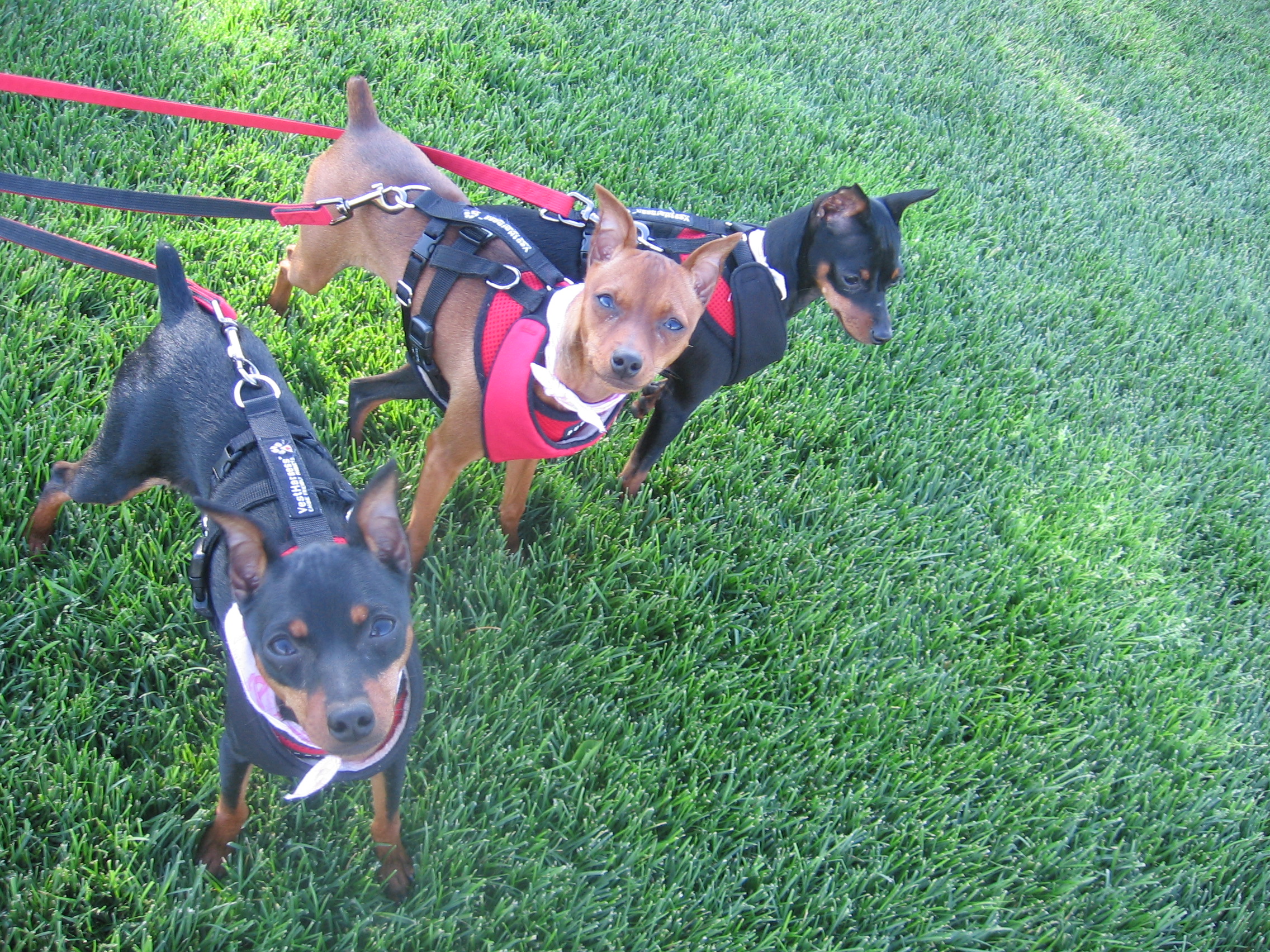
Aspen, Colorado


 MinPinMoments